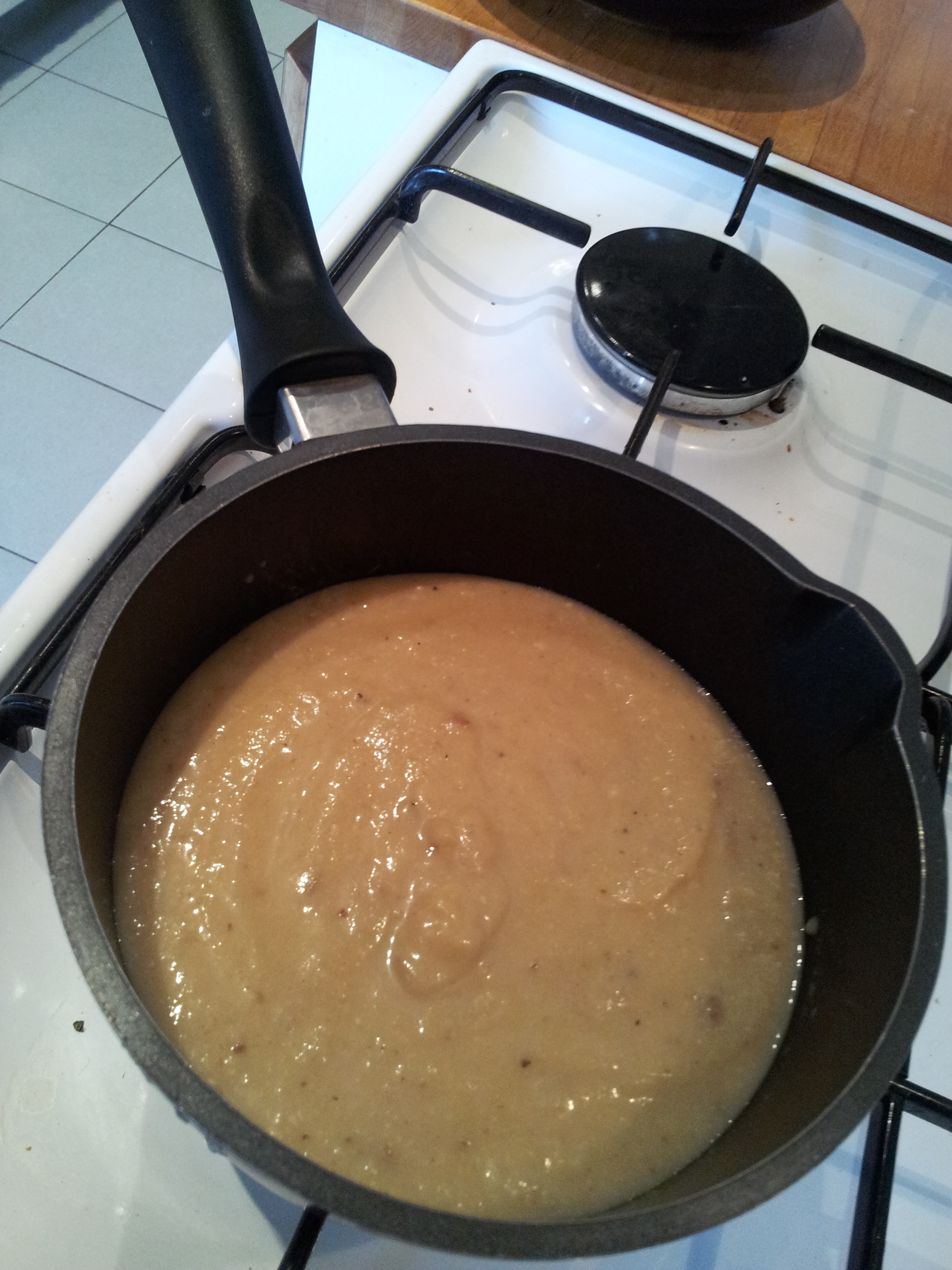
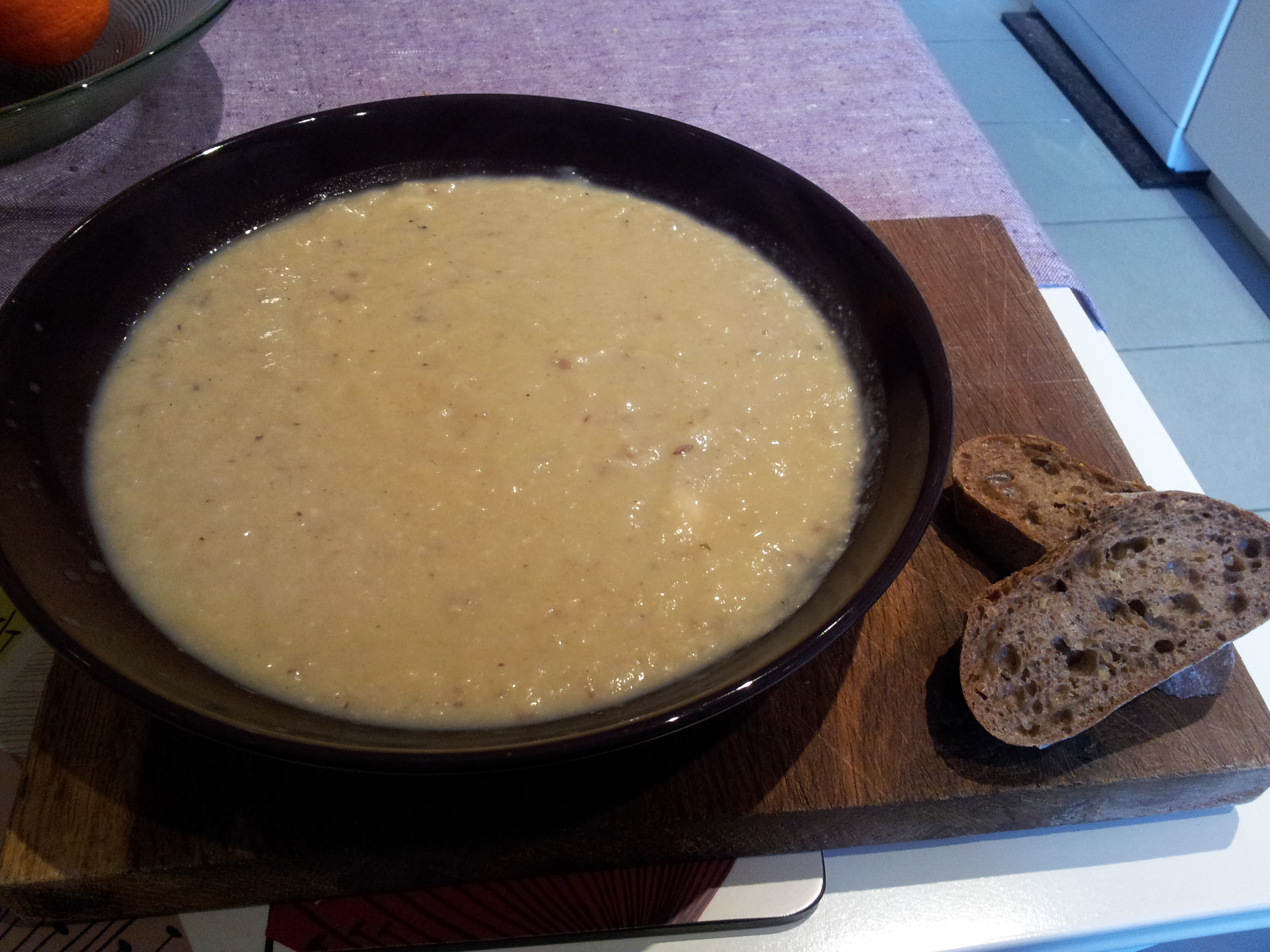
This one is a tasty, creamy warmer. An ideal autumn lunch, or perfect for a healthy meal on a cosy night in.
Ingredients 2 leeks
1/2 a cauliflower
80g almonds
2 garlic cloves
1 teaspoon of fresh ginger
1 tablespoon coriander seeds
2 teaspoons cumin seeds
2 teaspoons cayenne pepper
1 teaspoon fennel seeds
Juice of 1/2 a lime
1 tablespoon of olive oil
150mls low fat milk
500mls of stock + water as needed
Salt & pepper to taste
Method
1. Chop up the leeks and cauliflower.
2. Add the olive oil to a large saucepan and place on a low heat.
3. Add the garlic, ginger, spices and herbs to the saucepan for around 30 seconds until the seeds start to split open. You should be able to smell them!
4. Put in the leeks, cauliflower and almonds and give the saucepan a stir; coating the veggies in the spices.
5. Pour over the stock and enough water to just reach the top of the vegetables. Leave simmering on a low-medium heat until the vegetables have softened.
6. Add the milk and the lime juice to the saucepan and let the soup cool.
7. Once cooled, blend the soup using either a hand blender or a food processor. If it’s too thick for your preference, add some more water.
8. Reheat, refrigerate or freeze as desired.
9. Serve with a wholemeal roll for a healthy, filling lunch!
The nutritional data below is based on the above yielding 10 portions.
I love soups, (see a few reasons why in my Dietitian’s Kitchen post). In short, they’re healthy, cheap and easy to make.
I started making soups when I was about 16 and became interested in eating healthily. Then, when I was at university, I found that I could pretty much chuck any vegetables in with some suitable spices or herbs and it’d taste good, so soups became a go-to. I find it very difficult to go wrong because as long as you don’t add too much of something, you can continually adjust the flavours as you go.
In basis, every soup I make starts out with the same base; onion and garlic. Then I just throw in the vegetables, add a protein (meat, pulses or lentils), add spices, season, cover it in stock and let the vegetables soften. Sometimes, if I’m not going to be having bread with it I’ll add in potato, rice or noodles. My favourite is when I use a chicken carcass to make a tasty chicken soup, mmhm.
This soup recipe is using a butternut squash; another firm favourite of mine, especially during those Winter months. This is low in calories, high in fibre and packed with vitamins A and C. This soup contains some protein in the lentils, but I’d recommend another source of protein (boiled egg, 25g of nuts or more lentils) if you’re having this as a main meal. Team with a slice of wholegrain bread for a lovely lunch.
By the way, I always make soup on mass and freeze or refrigerate it. So you’ll find this recipe makes loads!
Ingredients 1 butternut squash (around 1kg)
2 large onions
4 cloves of garlic
3 carrots
1/2 a cauliflower
180g lentils
Olive oil
500ml chicken or vegetable stock
2 teaspoons paprika
1 teaspoon oregano
1 tablespoon turmeric
Water
Salt & pepper
Optional: 1 tablespoon low fat Greek yoghurt
Method 1. Preheat the oven to 240’c
2. Peel the squash and chop off both ends.
3. Slice the squash down the middle (length-ways) and scoop out all the seeds and pith in the middle.
4. Chop squash roughly into 1 inch cubes.
5. Drizzle a little (around 2 tablespoons) of olive oil into an oven proof dish and add the squash. Sprinkle with some paprika, ground pepper and a little salt. Place in the oven for around 1 hour or until the squash is soft and just beginning to brown.
6. While the squash is roasting, chop up the rest of your vegetables.
7. Add a tablespoon of olive oil to a large saucepan (big enough to hold all of the soup) and add the garlic, chopped onions and oregano. Heat on a low-medium heat until the onions appear to have a slight glaze.
8. Once the squash is ready, add it to the saucepan along with all of the other vegetables and lentils. Give it all a good mix.
9. Pour over the stock and enough water to cover the vegetables (you may need to add more if you want a runnier soup).
10. Leave the soup to simmer until all the vegetables are cooked.
11. Once the veg is cooked, remove from the heat and let cool a little before blending (trust me…blending hot soup can burn!)
12. When you’re ready to eat, reheat, stir in the turmeric and add a dash of yoghurt to make it taste even more creamy. Voilà…Yum!
CALORIES: 160kcal PROTEIN: 6g TOTAL FAT: 5g SATURATED FAT: 0.8g (This is based on the above recipe yielding 8 servings)
Iron plays an important role in several essential bodily functions. It’s a crucial ingredient for haemoglobin, the substance found in red blood cells that carries oxygen around the body. Without oxygen, our organs and cells would not be able to respire; a process that keeps us alive! Although transport of oxygen is a principle function of iron, it is also a component of enzymes and helps with energy production.
Where do we get it from?
There are two types of iron; haem and non-haem. Haem sources of iron are found in meat and fish, and are more easily absorbed by the body than non-haem sources. For this reason, vegans and vegetarians should take extra care to include plenty of iron rich foods in their diet. See my post on ‘how to be a healthy veggie‘ for more information.
Foods containing high levels of iron include; meat (especially offal), fish, eggs, dark green vegetables (spinach, swiss chard, kale, bok choy), lentils, beans (kidney, black, chic peas), wholegrains, nuts and dried fruit.
Some foods, such as soy bean products (milk, yoghurts and tofu), breakfast cereals and flour are fortified with iron. These can be a handy source, especially for fussy eaters, so check the labels of your favourites!
A handy hint: Vitamin C can help our body absorb more iron. So by having a source of vitamin C alongside your meal, you’ll get the most iron you can from it. Good sources of vitamin C include; citrus fruits, peppers, broccoli and sweet potato.
You should also avoid having tea and coffee at the same time as meals, as they contain phytates which bind with the iron and make it more difficult for the body to absorb.
How much do we need?
Iron reference nutrient intake gradually increases throughout childhood. The recommended daily intake for the adult population is 8.7mg for men and 14.8mg for women. Women have a higher requirement to allow for losses during menstruation (Department of Health, 1991).
Below shows the amount of iron contained in 50g of;
Liver* = 5mg
Lentils = 1.5mg
Dried apricots = 2mg
Broccoli = 0.5mg
Breakfast cereals (30g portion) = 4mg (depends on cereal)
An average steak will provide about 7mg of iron
*Liver is not recommended during pregnancy due to its high vitamin A content.
What if we don’t get enough?
Iron deficiency anemia or IDA is one of the most common nutritional deficiencies in the world. It occurs when a lack of iron in the body results in a low number of red blood cells. IDA can result in the following symptoms; fatigue, breathlessness, insomnia, loss of appetite, decreased immunity, heart palpitations and a tingling sensation in your fingers and toes (paraesthesia).
IDA is usually easily treated by taking a iron supplement which boosts the levels of iron in your body. Recurrence can then be prevented by ensuring a diet rich in good sources of iron. Some women who regularly have heavy periods may need to take an iron supplement, ask your doctor for more advice.
What if we get too much?
Too much iron usually occurs through use of a supplement but can lead to constipation, nausea, vomiting, and stomach pain. Intakes of less than 20mg are unlikely to cause any problems, but very high doses can be fatal, so be sure to keep iron supplements out of reach of children.
I’m not vegetarian, but I do enjoy vegetarian food. Every Monday, I experiment with a recipe that typically contains meat and try to make it with lentils, beans or another legume. I support ‘Meat Free Mondays’ for a couple of reasons; I like the taste of legumes and pulses, they’re lower in saturated fats than red meat PLUS I like the challenge of trying to make something where my boyfriend doesn’t notice the meat is ‘missing’!
If you’re thinking about becoming vegetarian or vegan though, it’s more complicated than just cutting meat and animal products from your diet.
First things first, a lot will depend to what degree you cut out meat. Is it just red meat (demi-vegetarian)? No red meat or poultry but you’ll eat fish (pescatarian)? No animals but still eat eggs and dairy (lacto-ovo-vegetarian)? Or no animals or animal products at all (vegan)? All of these animal products contain nutrients that your body needs, so naturally, if you’re cutting them out then you need to find an alternative source.
Proteins are made up of tiny pieces called amino acids. Amino acids are required by the body to make hormones, enzymes and replace muscle tissue. Some amino acids are essential; the body cannot make them, so they need to be ingested through our diet. Most meats and animal products are called complete proteins, which means that they provide all of the 9 essential amino acids. If still consuming dairy products and eggs, these are valuable sources of protein too – with eggs being a complete protein.
Quinoa and soya beans are also technically complete proteins, although they do not contain as higher levels of these amino acids as animal products do. Therefore, it’s best to mix things up a bit! Quinoa, despite it being a complete protein, is not a rich source, so it should not be the only protein containing food vegetarians eat. Your diet should also contain rich sources, ie; eggs, chic peas, beans and lentils. However, most vegan sources of protein are not complete, meaning that in order to obtain all of the essential amino acids, a couple of protein sources need to be mixed. Legumes (lentils, chic peas, beans etc) are typically low in the essential amino acid called methionine. Grains (rice, cous-cous, brown bread etc), while containing methionine, are insufficient in lysine. By combining legume + grain, vegetarians or vegans can obtain a complete protein. For example; beans on toast, rice and black bean curry, lentil soup and bread or pita bread and hummus. Meat eaters and vegetarians should aim to have 2-3 servings of complete proteins per day.
Another nutrient to be aware of is iron. Women have a higher requirement of iron than men (due to menstruation) and intakes are typically below what is recommended, especially in adolescent girls. Iron found in meat is called haem-iron, and is more readily absorbed than non-haem iron. For this reason, female vegetarians especially, need to ensure that they’re having a couple of sources of non-haem iron daily. Iron can be found in beans and pulses, eggs, fortified breakfast cereals, dark green leafy vegetables (like spinach, broccoli and swiss chard), wholemeal flour, dried apricots and seeds. As I said, these non-haem sources of iron aren’t so easily absorbed by the body, however, there are a few tips than can help enhance absorption. Vitamin C (found in citrus fruits, peppers and sweet potato) helps improve the amount of iron we can obtain from food. So having a glass of orange juice with cereal or some sweet potato in your lentil soup will help up your iron intake. Also, avoid having tea and coffee alongside a meal as they contain tannins and phytates that bind with iron and make it more difficult for the body to absorb.
If vegan, good sources of calcium will be required to replace calcium obtained from dairy (see my nutrient nugget for more info on calcium). Calcium is found in green leafy veg like; kale, broccoli, rocket and watercress, beans, pulses, fish where you eat the bones (tinned mackerel/sardines), almonds, brazil nuts, sesame seeds and dried apricots. Some soya milks and tofu are also fortified with calcium. Vitamin D (obtained from sunlight) enhances calcium absorption, so those at risk of poor vitamin D status should eat a variety of the above foods daily and you should consider a vitamin D supplement. See my vitamin D post.
Vitamin B12 is found in animals and animal products. The requirement for this nutrient is small so deficiency is rare but strict vegans should consume a fortified food or take a supplement. For example; yeast extract (marmite), fortified soya products, breakfast cereals and vegetable stocks.
Finally, as milk is an important source of iodine, vegans are at risk of low intakes. If this is the case it’s recommended to use iodized salt or take a nutritional supplement.
In order to get all the vitamins and minerals we need, a large variety of fruits and vegetables should be eaten. Think about eating as many different colours as possible! This, alongside beans, lentils, grains and nuts will help ensure your vegetarian or vegan diet is adequate in all nutrients.
I guess a lot of you, like me, feel that your appetite decreases when the sun is out. Sometimes, I really don’t feel like breakfast but I know if I don’t have it, I’ll feel rubbish later on and probably end up picking.
If you need some ideas for fresh, light breakfasts that still keep you feeling full till lunchtime, look no further!
Here are my top 5;
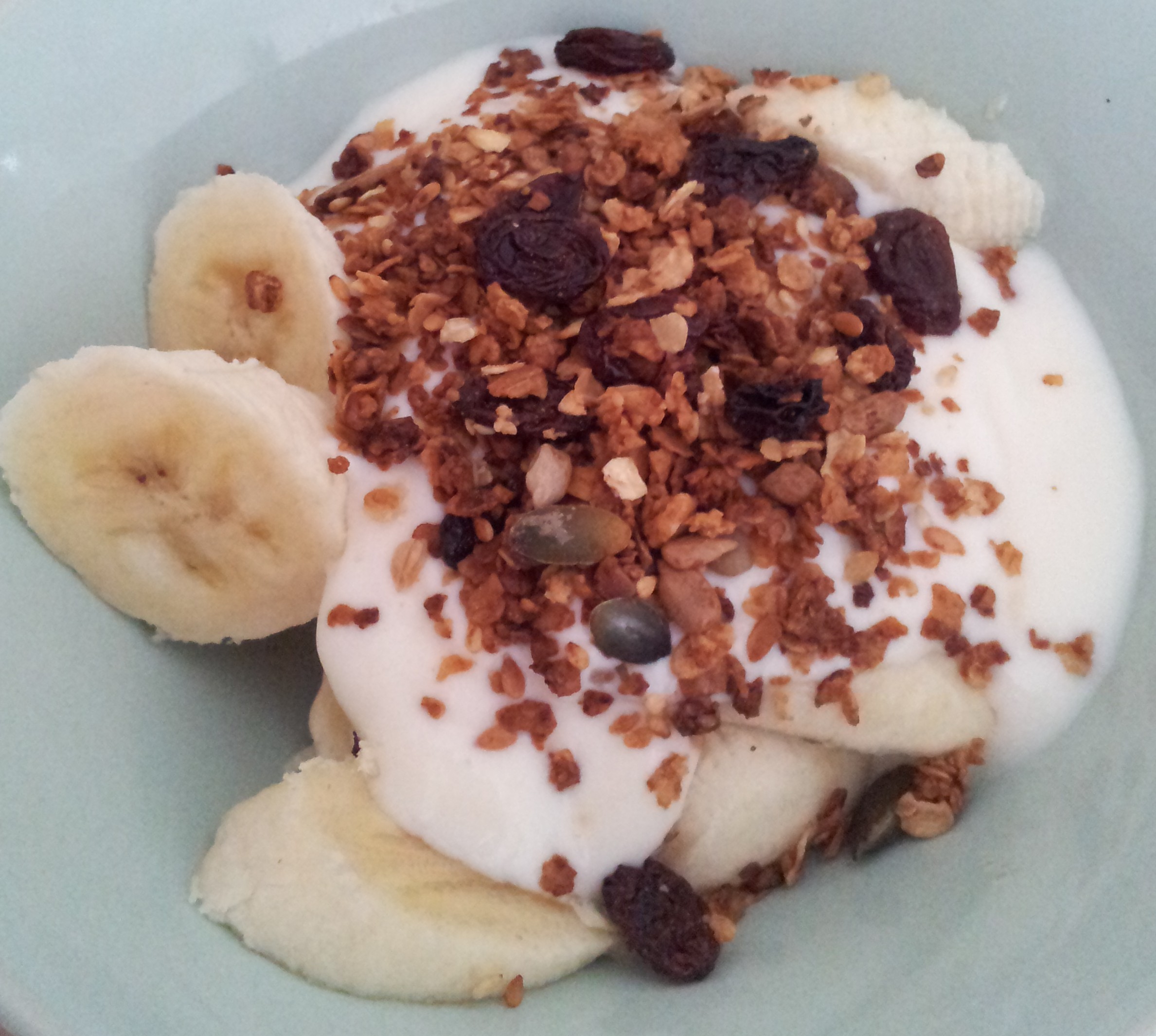
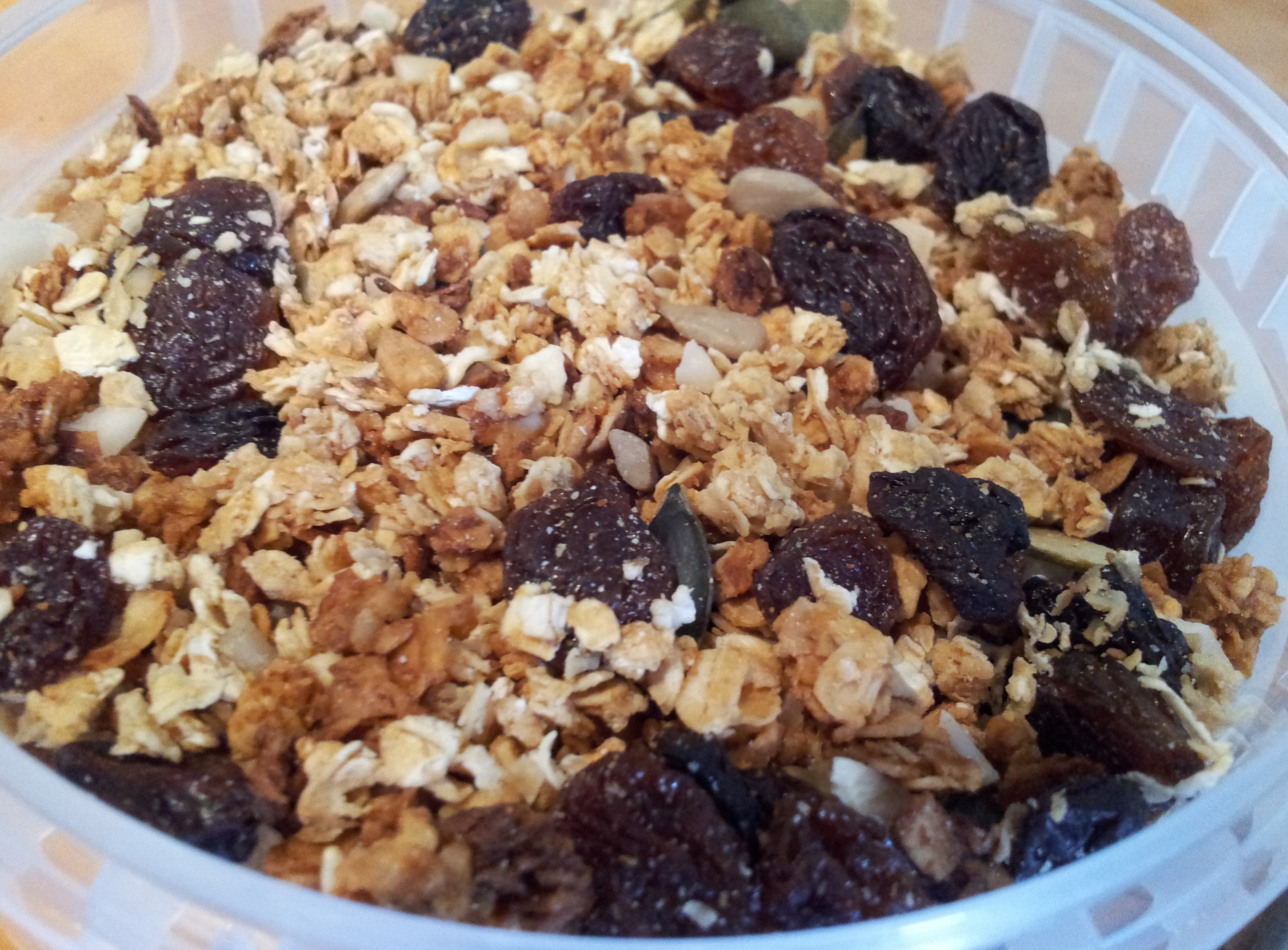
Homemade Granola with yoghurt and fresh fruit Crunchy, yummy, sweet, light and refreshing; this breakfast has it all! I use natural and fruit yoghurts depending on what I fancy and also change up the fruit – it’s not a breakfast I get bored of because of the endless combinations. Nutrition wise, this is packed with minerals and vitamins, you’ve got the oats to provide long lasting energy, the protein (found in nuts, seeds and yoghurt) to keep you fuller for longer and one or two of your 5-a-day in the dried and fresh fruit. What’s not to love?!
See my Homemade Granola recipe here.
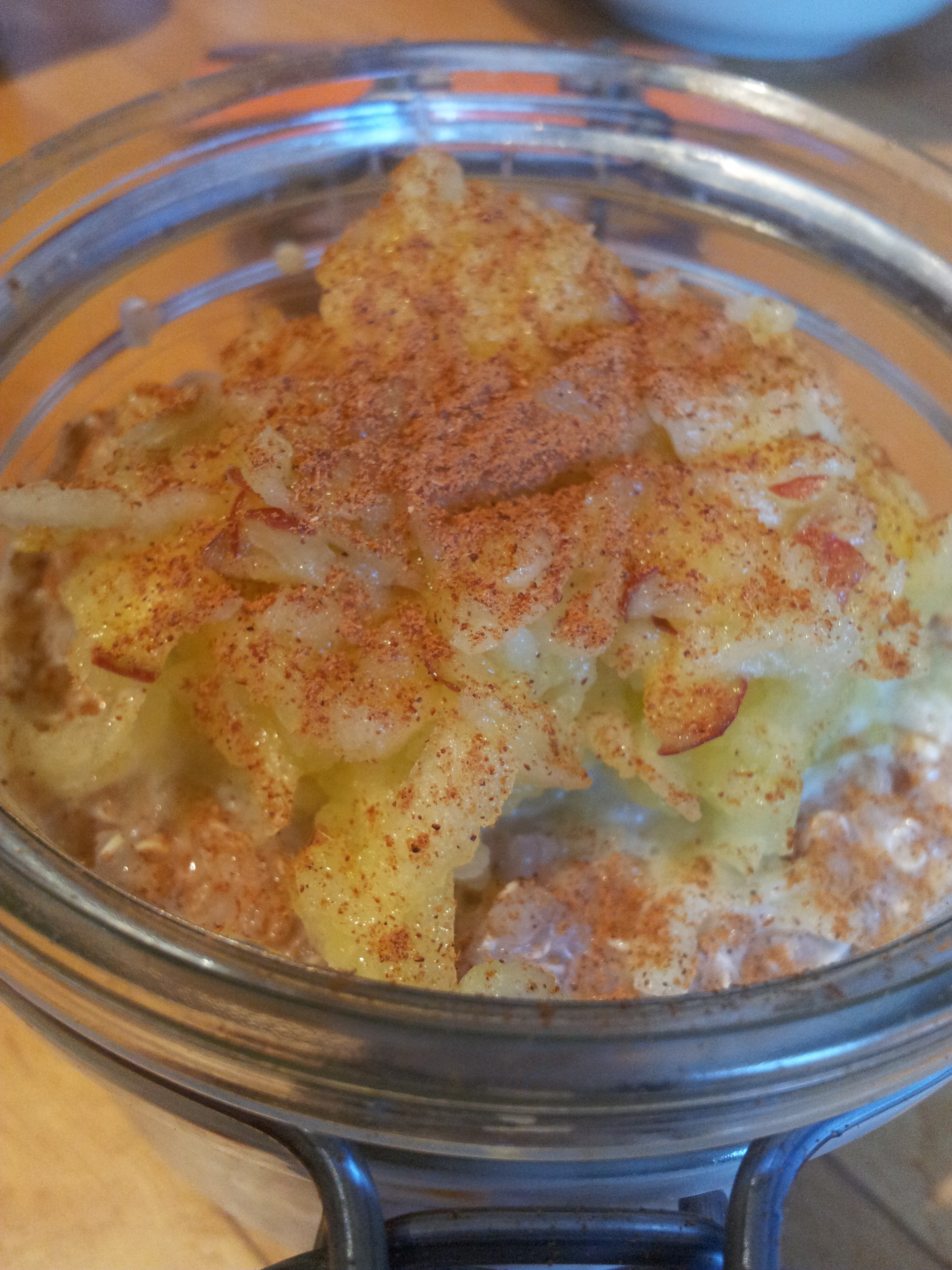
Quinoa porridge with grated apple and cinnamon Who says porridge is only for winter?! I know there’s still some days where I just fancy a hot breakfast, and this is my go-to. The porridge oats keep you going all morning and I normally make this with milk for my protein source (sometimes adding a dollop of yoghurt on top too). My recipe’s here. I’ll often add seeds for a bit of crunch (and more protein!) and then the apple for sweetness and one of my 5-a-day. Sometimes when I’m feeling particularly sweet-toothed, I’ll add in some honey.
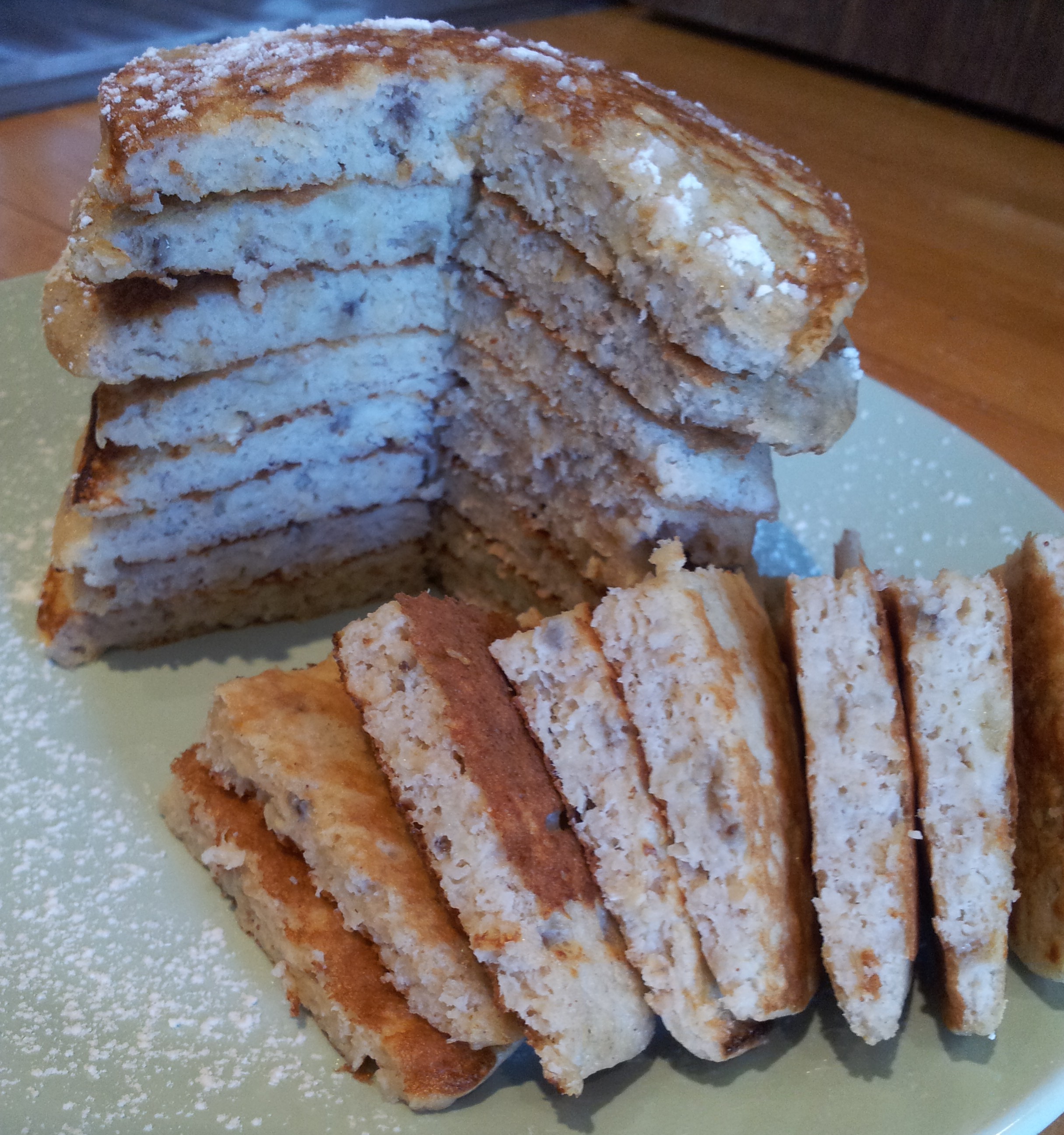
Banana Pancakes
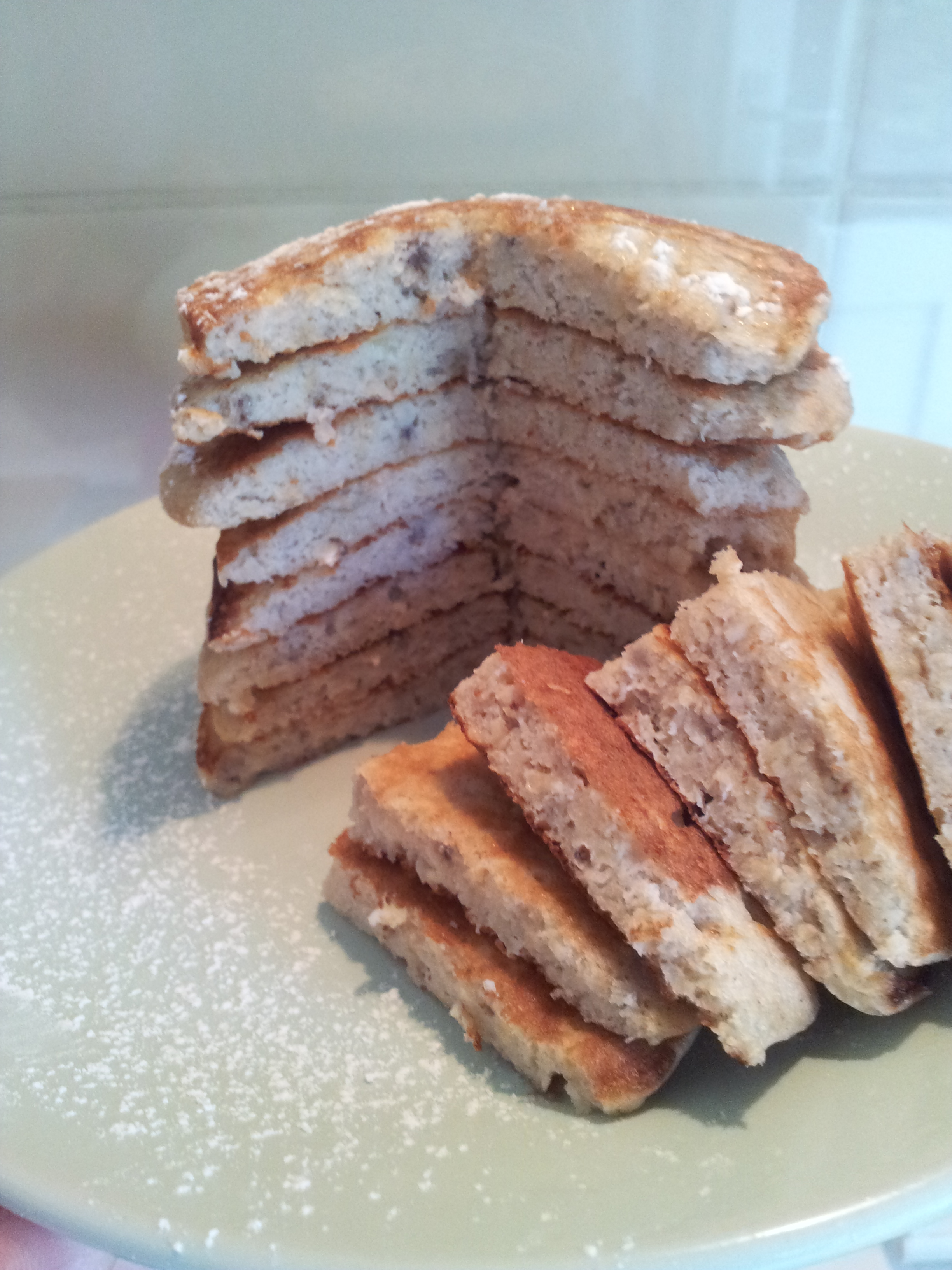
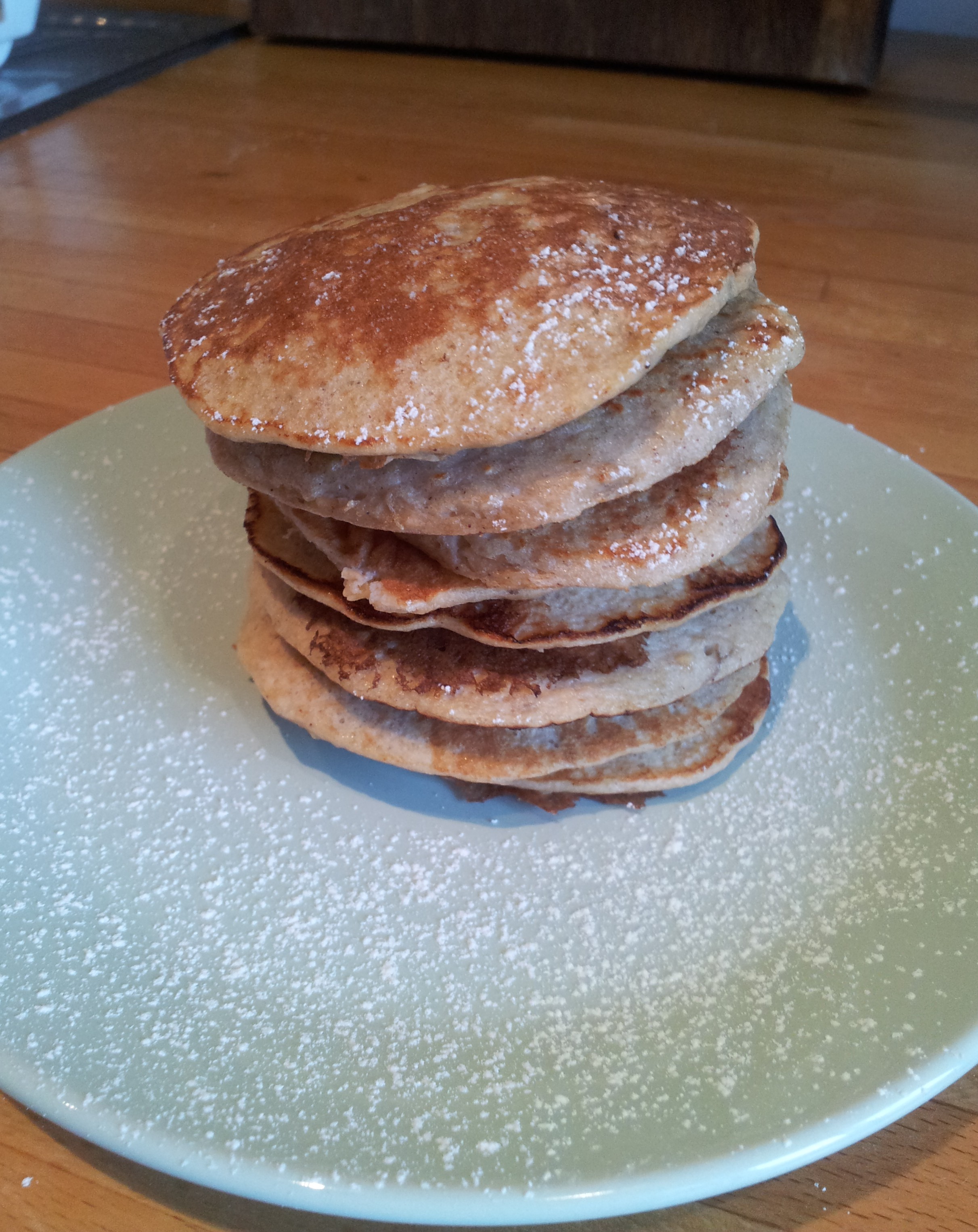
If you haven’t already, you NEED to try this recipe. Find it here. It has changed my life. Well, that may be a slight exaggeration but it’s certainly changed my perspective on pancakes!
Oats, fruit (banana) and protein (eggs)…are you sensing a theme here?! This recipe will make you want to get up earlier in the morning so you have time to make them!
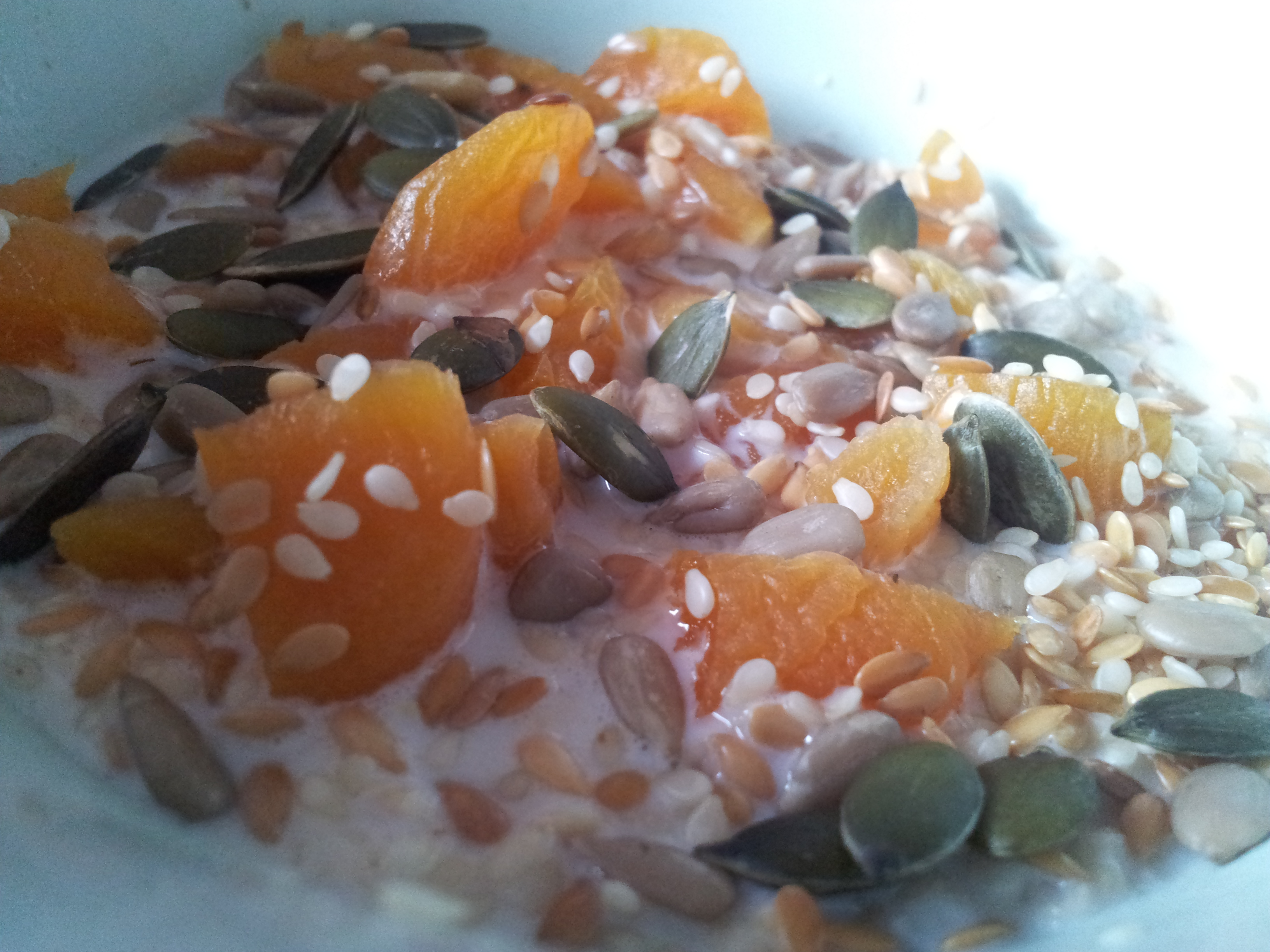
Overnight oats with apricots and seeds
Want to get up and have breakfast ready prepared? Enjoy porridge but don’t have the time in the morning to prepare it? Overnight oats are a simple alternative to hot porridge. To make, simply put 40g of oats in a dish/container and cover with milk (around 100-125ml). Replace lid or cover with clingfilm and leave in the fridge overnight. The possibilities for toppings are endless, but I love the crunch of seeds with apricot sweetness. Mmmhmm!
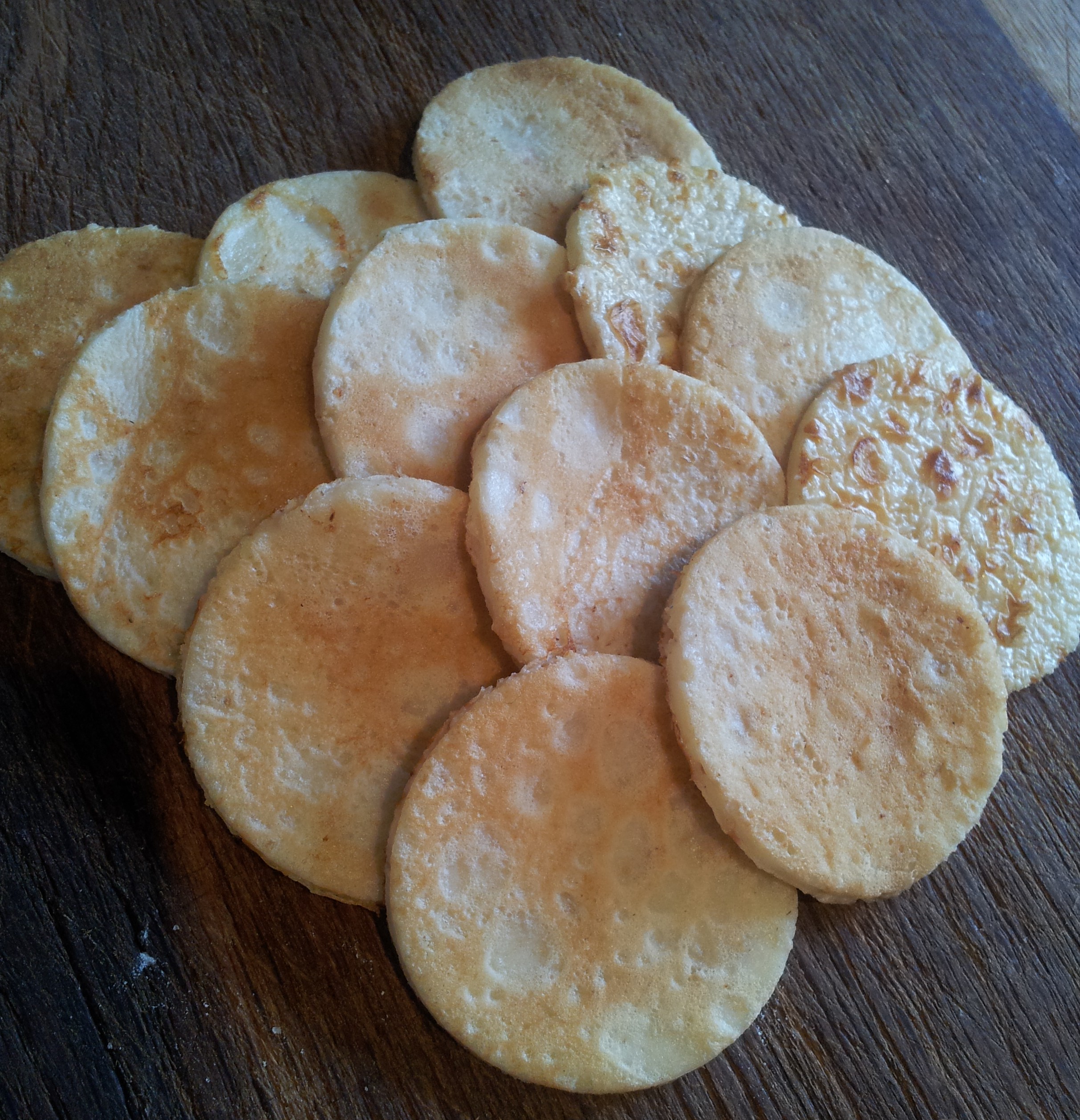
Smoked salmon and scrambled egg on homemade oat bilinis When I’m feeling like an indulgent brunch at the weekend, I’ll always opt for scrambled egg and smoked salmon. Firstly, I’m not really a fan of a fry up and secondly, I love salmon! This is a really easy dish to make at home, especially if you’ve made the bilinis beforehand, just heat them through for a minute. Check out my oat bilini recipe here.
Serve with a small glass of orange juice – it counts towards one of your 5-a-day!
So I hope this gives you some ideas for healthy breakfasts. These all should keep you full until lunch time and give your morning a great start! Start as you mean to go on!
TOP TIP: Mix up the toppings and fruits so that you don’t get bored eating the same thing every day.
Do send me your images, suggestions or tweaks, I love hearing from you!
I am a big fan of pancakes. Savoury, sweet…it doesn’t bother me, in fact one of each is just about perfect! In university, we used to have big pancake parties, I must have made about 100 pancakes – not all for me I must add! It was great fun though, and I have some lovely memories of pancake days!
I’ve adapted a pancake style mix to make these bilinis. I’ve added oats for a little texture and to promote a feeling of fullness. I make these bilinis so they’re on standby for snacks, canapes or starters, and you could incorporate them into a dessert too. They’re great sweet or savoury. Plus they’re so cute!!
Ingredients 100ml semi-skimmed milk
150ml water (you could use 250ml skimmed milk instead)
1 egg
100g flour
50g oats
Method
1. Mix together egg and milk/milk and water.
2. Add oats and flour and mix well. The mixture will be quite runny.
3. Heat frying pan and add a little oil (I used spray oil, or you can use kitchen paper to grease it with a little margarine/cooking oil).
4. Using a ladle, pour the mix into the hot pan ensuring whole pan is covered.
5. Cook on a low-medium heat for 3-5 minutes, until the pancake is solid enough to turn over (I use a spatula for this as it’s not as ‘flippable’ as a normal pancake).
6. Cook for 2-3 minutes on the other side.
7. Remove from pan, let cool. Then, using a circular shaped cutter, cut out the bilinis from the pancake.
This mix should make around 3 pancakes, each making around 8 bilinis. Nutrition info below is per bilini without topping.
CALORIES: 30 kcal
PROTEIN: 1g
FAT: 0.5g
They’ll store in an airtight container in the fridge for a few days. Perfect for when you’re peckish! Top with some cream cheese, cucumber and salmon or some peanut butter if you’re fancying sweet.
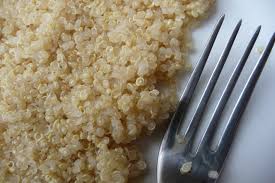
As you’ll see in my post all about Quinoa, I’m a newbie. But, one of the first things I had to try was getting a good recipe for quinoa porridge. I have tweaked and mixed the method round a bit and I’ve finally found one that works for me. Quinoa has a subtle nutty flavour which makes it taste comforting and indulgent – but you’ll be pleased to hear it’s healthy too!
This recipe is really simple, easily adapted and can be eaten hot or cold. So, if you’re in a hurry in the mornings just make it the night before and leave it in the fridge overnight!
Ingredients
50g uncooked quinoa
100ml of milk (I used cow’s milk but try almond/soya milk for a vegan alternative)
Topping of choice
Method 1. Place the quinoa in a sieve and rinse under a cold, running tap for 5 minutes. You need to make sure the quinoa is well rinsed otherwise it has a bitter taste.
2. Put rinsed quinoa into a saucepan of cold water and bring to the boil, once boiling, reduce heat.
3. Let quinoa simmer in saucepan until quinoa is cooked* (look out for the grains splitting open slightly).
4. Drain the water from the saucepan, and mix together the cooked quinoa and the milk.
5. Now you have two options:
a) To make your quinoa porridge hot, continue to heat the quinoa and milk until the milk is absorbed and all of the quinoa is cooked.
OR
b) For cold, ‘overnight oat’ style just cover and place in the fridge overnight.
6. Add desired toppings and enjoy!
*If you want your porridge warm, drain off the water just before all the grains are thoroughly cooked – they should absorb the warm milk better!
CALORIES: 170kcal PROTEIN: 7g FAT: 4g
(Values are for a 50g (raw weight) serving of quinoa with semi-skimmed milk. Nutritional values will vary depending on ingredients used)
TOP TIP: Quinoa can be quite plain tasting so it definitely needs something to compliment the subtle nutty flavour; fresh orange and seeds, ginger, honey and raisins or apple and cinnamon are all yummy!
I’m pretty late to jump on the quinoa bandwagon, but now I keep finding new uses for it. So watch out for recipes using this baby!
As quinoa is something that’s increased in popularity only recently, I didn’t know that much about it nutritionally either. So I thought I’d share my research with you.
What is quinoa? Hailing from South America, and a staple of the Inca people for hundreds of years, quinoa is a wheat free alternative to starchy grains. It has a lot of the properties of typical grains (like rice and pasta) but isn’t from the same family, it’s actually the same family as chard, beets and spinach. However, as it is a cereal product, it’s considered a carbohydrate on the Eatwell Plate.
What about nutritionally? Like other grains, quinoa is packed with fibre which helps keep your bowels healthy. It’s also a handy source of protein, especially for vegetarians or vegans; providing 9 essential amino acids in higher concentrations than found in other grains.
Having fibre and protein together helps keep you full, so the mixture of these two found in quinoa also means that it is fabulous for those trying to lose weight. Quinoa is also gluten free, making it an excellent addition to the pantry of any coeliac.
Finally, quinoa contains lots of micronutrients including; magnesium, iron, B-vitamins and calcium.
Per 100g serving
(approx. 50g raw)
CALORIES
120kcal
PROTEIN
4g
CARBOHYDRATE
21g
FIBRE
3g
TOTAL FAT
2g
SATURATED FAT
0.3g
What can it be used for?
Quinoa is incredibly versatile. On its own it has a subtle nutty taste which makes it a useful addition for soups, stews and curries as it won’t change the flavour too much. I would say it has a similar light texture to couscous, but has a slight crunch. I’ve eaten it hot and cold and both ways it tastes fantastic! I’ve used it as a replacement to rice, oats and even trialled some recipes that traditionally use pasta. I’ve also made quinoa porridge, see my recipe here.
How do I cook it? It’s really important to rinse your quinoa before cooking it, as otherwise the coating on the grain leaves a bitter taste. Once you’ve rinsed it well, you can cook it as you would rice. It takes about 15 minutes on the hob and you can tell when it’s done by watching out for the seeds splitting open slightly.
Conclusion
Quinoa features regularly in our diet, and I’m enjoying experimenting with what else I can do with it. It’s a great alternative to traditional grains and has added nutritional benefits too. Variety is the spice of life so as far as I’m concerned it’s a fab addition to a healthy balanced diet.
There are quite a few quinoa recipes online, but keep an eye out for the ones I post too. I’d also love to hear your suggestions!
As you might have guessed, I am a big fan of oats. So, I LOVE granola. Sadly, since I’ve moved to Belgium I’ve been unable to find a granola that doesn’t have stacks of added sugar and unnecessary ingredients. As a result, I’ve taken to making my own. It’s super easy and literally takes 5 minutes, so I’ll never buy shop-bought again!
Granola is basically cooked oats with all sorts of fruits, nuts and whatever other yummy healthy treats you decide to chuck in. So with wholegrains, protein and fruit it’s got everything you need to keep you going all morning. Plus homemaking your granola means you know exactly what’s in it.
This particular recipe is an mixture of a couple of recipes I’ve found online, but as it’s so easy to tweak, it tends to differ slightly every time.
Ingredients 200g of oats
Two tablespoons of oil (I tend to use coconut or olive oil)
Two-three tablespoons of honey/maple syrup or a mixture of both
One tablespoon of water
One teaspoon vanilla extract
200g of dried fruit
50g seeds and/or nuts Optional: cinnamon, chocolate chips, ginger etc
Method 1. Preheat oven to 200 degrees C and lay greaseproof paper on a large, flat baking tray.
2. Mix together the oil, honey, water and vanilla extract.
3. Pour the oats into the mixture and stir well, ensuring every oat is covered. It may be easier to get messy and use your hands!
4. If you want to cook the nuts, seeds and dried fruit, add them now. I like my raisins slightly crunchy so cook them! Alternatively they can be added after cooking.
5. Place the mixture onto the greaseproof paper and place in the hot oven for about 10 minutes.
6. Stir the mix and bake for 5-10 minutes more until the oats are golden.
7. Let the oats cool and, if you haven’t already, add in the nuts, seeds and dried fruit.
8. Store in an airtight container!
CALORIES: 170kcal PROTEIN: 5g
FAT: 5.5g
(Values are for a 40g serving. Nutritional values will vary depending on ingredients used)
I like my granola with yoghurt and fruit. It makes for a quick, healthy and easy breakfast that I really enjoy.
I’d love to hear your adaptations so let me know how yours goes!
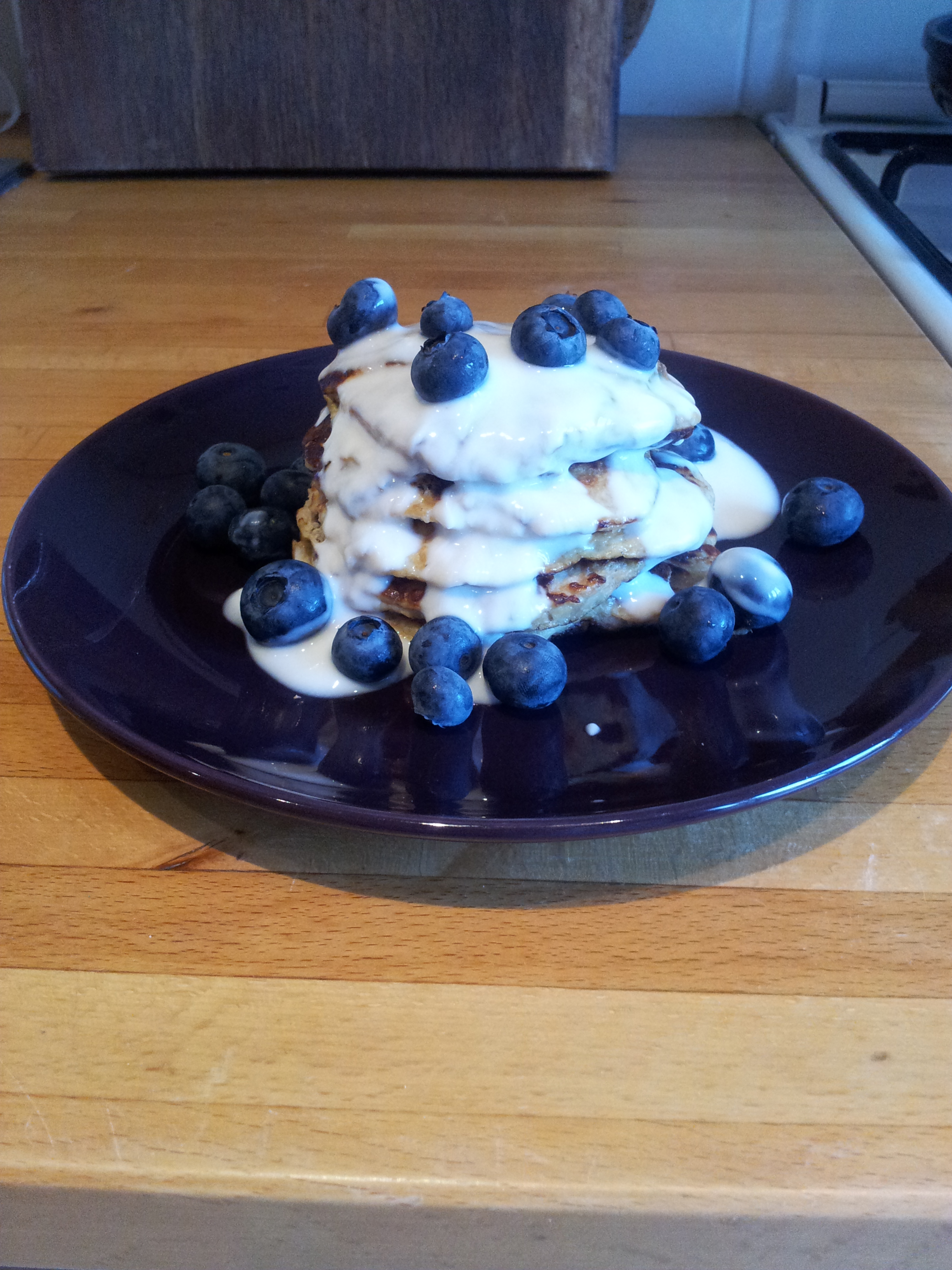
These are fantastic; versatile, so easy to make AND they taste oh-so-good! One of your 5-a-day, a great source of protein and oats to keep those hunger pangs at bay!
Ingredients One banana
Two eggs
Teaspoon of cinnamon
Two tablespoons of oats
Method
1. Whisk the two eggs in a bowl big enough to hold all the ingredients.
2. Slice the banana into the eggs and mash with a fork, masher or blender. Make sure both ingredients are well combined.
3. Add the cinnamon and oats and whisk until you have a smooth mixture.
4. Heat some oil in a pan (I use spray oil – you need very little) and add a small amount of mixture to the pan. (*TIP: Pour mixture slowly to keep a circle shape*)
5. Cook on a low-medium heat til the pancake is solid enough for you to flip it (around 2-3 minutes per side).
6. Keep going until you run out of mixture and top with whatever your preference!
CALORIES: 300kcal
PROTEIN: 13g
FAT: 8g
If you have a sweet tooth, try making them with a ripe or overripe banana, these taste naturally sweeter and you won’t need any added sugar.
My favourite topping is low fat natural yoghurt and fresh fruit (making it 2 of your 5-a-day!). This morning it was blueberries!
Do let me know what you think!
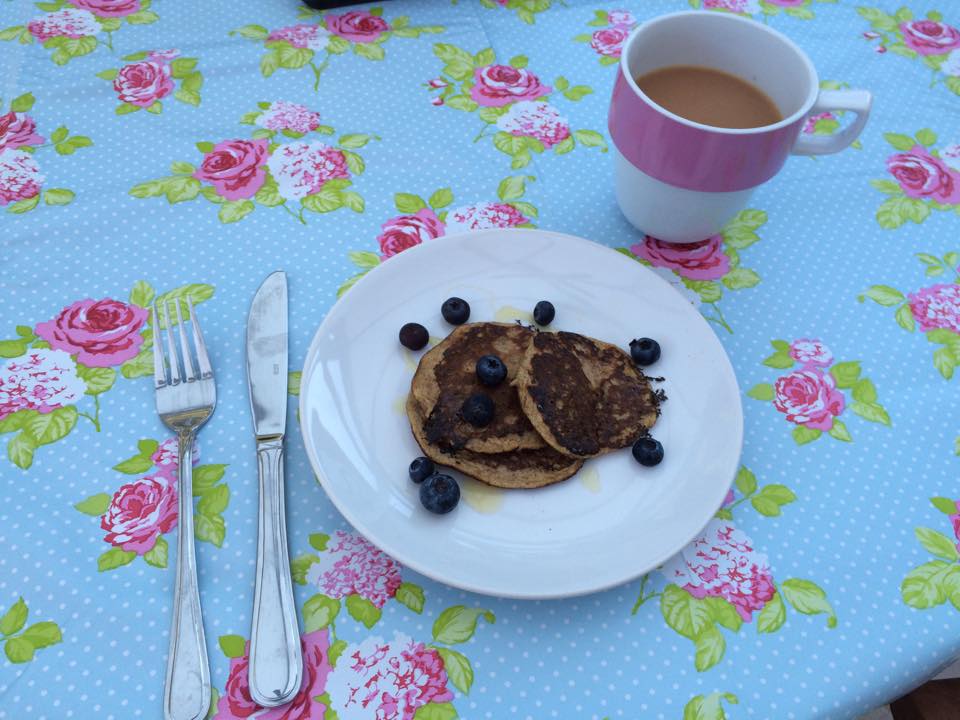
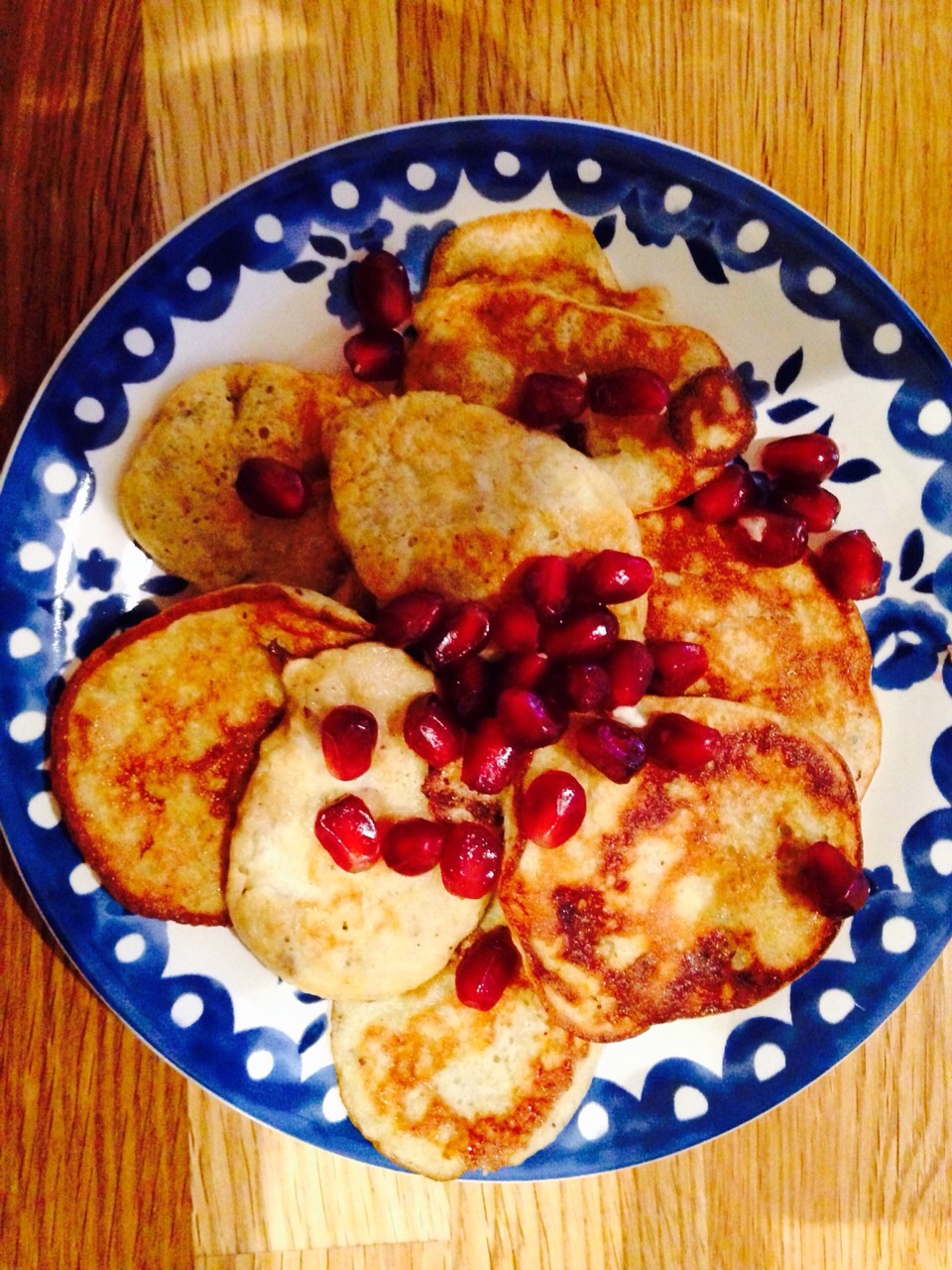
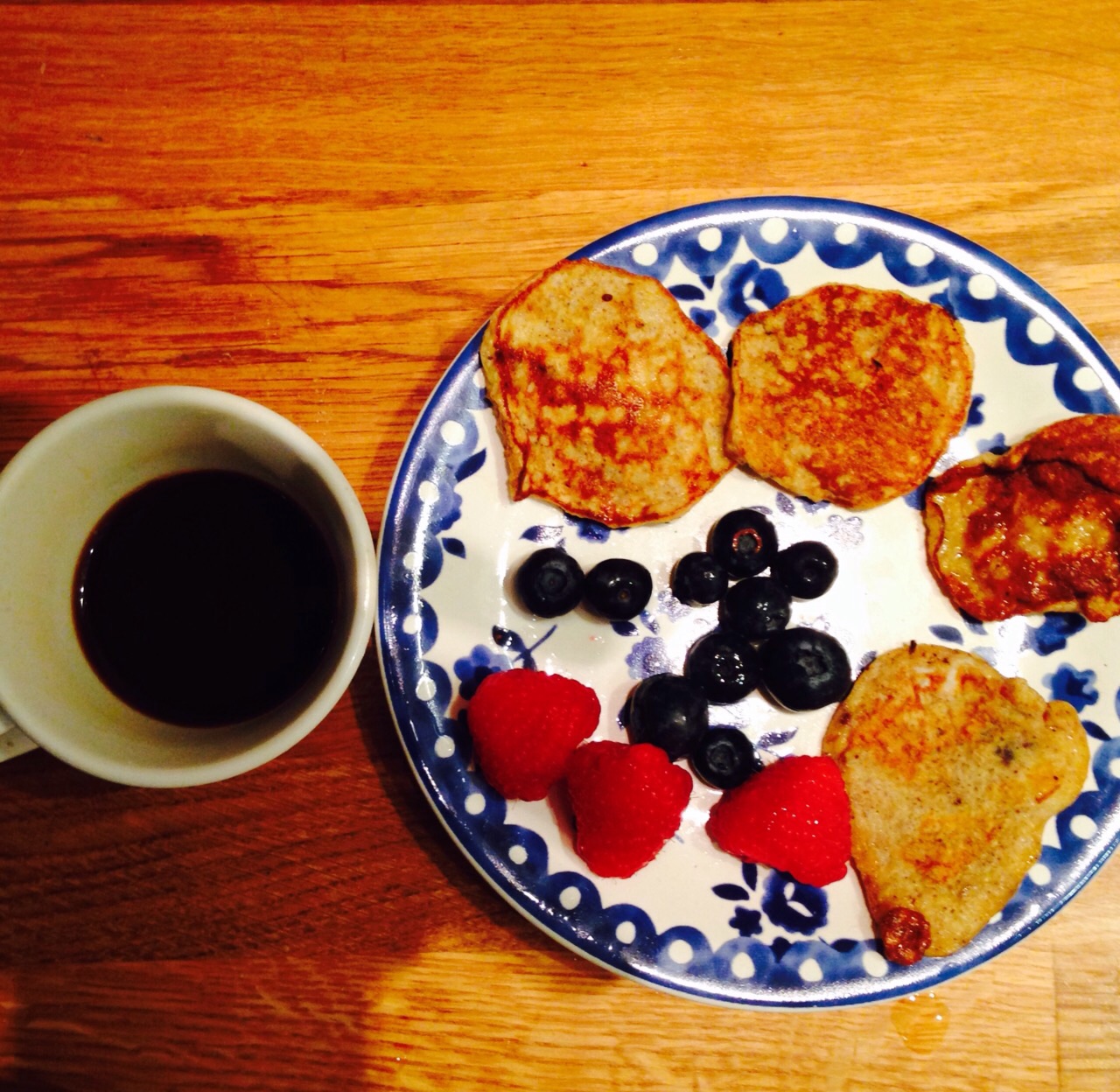
I love receiving your pictures of my recipes, thank you!
 Ingredients
 The nutritional data below is based on the above yielding 10 portions.




 Jen Credicott | Dietitian