Healthy Living, Weight Loss

Portion Distortion

Did you know….?

  • Dinner plate size has increased an average of 6.5cm over the last 50 years – that increases the area on your plate by up to 70%!
  • Choosing extra thickly sliced bread over medium increases the amount you eat of it by 60%
  • Fast-food chains used to serve just one size of fries, this is now the portion size provided with the kids meals

Given these facts, it’s not surprising at how many people now struggle with obesity across the world. It has become the norm to expect larger portions when eating out, and this (together with increased plate size) often leads to eating more at home. Our bodies have not adapted and cannot keep up with the pace at which food technology and environments/situations in which we eat are evolving.

This is portion distortion.
The norm becomes bigger and bigger until the bigger is the new ‘normal’.

Obviously, everyone is different and will need different amount of foods depending on your appetite, body size, how active you are and your current situation.

However, there are some simple tips you can apply when cooking and when eating out that will help you get your portion sizes back in check – and there’s no need for weighing scales or any special equipment!

This reference guide groups food into different types to make it easy to see what a typical portion* should be.

Vegetables
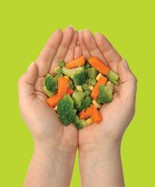
Guiding-Hands-ArtWhen you’re looking at how much of what to put on your plate, the vegetable part of your meal should take up around 1/3 to 1/2 of your plate, and roughly fill your hands like the picture opposite.
Recommended portion size of vegetables is larger than other foods because they are low in calories and provide us with minerals, vitamins and fibre.

Guiding-Hands-ArtFruits

A portion of fruit would be what you could fit in one hand, or roughly the size of your fist. The exception here is dried fruit, in this case you need to think of it in its hydrated form to get the right portion size. For example, 2-3 apricots would fill your hand, therefore 2-3 dried apricots are a portion.

Starchy Carbohydrates
Guiding-Hands-Art

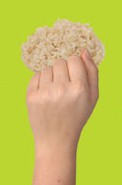
Starchy carbs include foods like; pasta, rice, bread, potatoes, cereals and cereal products. You should look at having a source of starchy carbs with every meal. Good choices are oats, wholewheat pasta, brown rice and wholegrain bread as these are higher in fibre and release energy more slowly. Depending on how active you are, you could have between 1-2 portions (or 1-2 clenched fists) of starchy carbohydrates with every meal.

ProteinGuiding-Hands-Art

The amount of protein someone needs can vary depending on their weight and what their aims are, but for the general population a portion is around the size of your palm. This would be equal to a small chicken breast, two eggs or a few tablespoons of beans/lentils. Aim to have 2-3 palm-sized portions every day.

Fats & Oils

Guiding-Hands-Art

As it’s the most calorie dense nutrient, a portion of fat or oil is considerably smaller than the other foods. There are some fats that are beneficial for heart health, but when it comes to calories a fat is a fat! More info
When you’re cooking with oils, spreading butter or using oil as a dressing, try to stick to no more than a thumb-print (or teaspoon) size portion.

In addition to the above, you should also try to have 2-3 portions of dairy products per day. A portion is a matchbox size of cheese, a standard yoghurt pot (~125g) or a 200ml glass of milk.

 *Serving or portion?

A serving is a measured amount of food or drink, such as one slice of bread or 100mls of juice. A portion is the amount of food that you put on your plate to eat, you choose whether this is a big or a small portion. Take soft drinks for example, they will often quote a serving size on the label that is less than the amount within the bottle.
Healthy Living, Nutrition, Weight Loss

Fibre

Dietitians and other healthcare professionals can often be heard talking about how we should eat more fibre. You may understand that it is “good for you” to have fibre in your diet. But have you ever thought about why?

This post explains the different types of fibre, looks at some of its benefits and suggests how you can include more of it in your diet.

Types of fibre

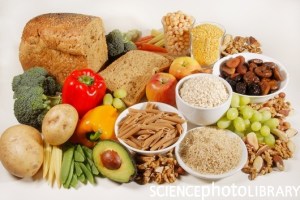
Fibre-rich foodsAn easy way to remember foods that contain fibre is that they all come from plants. Meat, fish and dairy foods do not contain fibre.
Fibre can be split into two different types, soluble and insoluble. Both have different health benefits, so we should try to include both types in our diets.

  • Soluble fibre
    As the name suggests, soluble fibre dissolves in water. In the gut, this helps soften your stools. Consequently, if you suffer from constipation, gradually increasing your intake of soluble fibre can help make it easier to go. Soluble fibre can also help lower cholesterol levels.
    Foods such as oats, pulses, lentils, golden linseeds, potatoes and vegetables are all good sources of soluble fibre.
  • Insoluble fibre
    Insoluble fibre cannot be digested, instead it is used as a ‘food’ source for good bacteria we have in the gut, helping keep our gut healthy. Insoluble fibre also acts as a sponge, helping keep us fuller for longer and move food through our digestive system.
    Good sources of insoluble fibre include; bran, wholegrain and wholemeal foods, skins of fruits and vegetables and nuts and seeds.

To help differentiate between the two different types, think about making porridge (or oatmeal) on the stove, the oats ‘dissolve’ into the liquid. When cooking brown rice, the rice does not dissolve, but rather absorbs the water and goes soft. This is because the oats are high in soluble fibre, whilst brown rice is high in insoluble fibre.

Benefits

As fibre can help you feel full for longer, it can be a useful tool when trying to manage your weight. It can also help control your blood glucose and cholesterol levels. Having a diet high in fibre can also reduce your risk of cardiovascular disease, type 2 diabetes and bowel cancer.

How much?

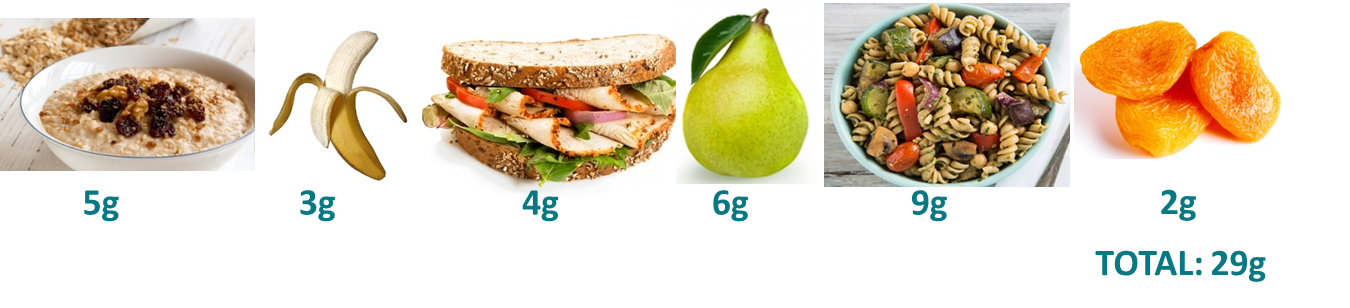
According to EFSA (European Food Safety Authority) adults should be aiming for around 25g of fibre per day. The British Guidelines recommend 30g a day. Most people aren’t eating enough. On average, people manage to eat around 14g of fibre per day.

Increase your fibre intake

If you want to increase your intake of fibre, it is important that you do so gradually. Increasing your intake too rapidly can result in stomach cramps and leave you feeling bloated. You should also make sure you drink plenty of water, aim for 6-8 glasses per day.

You can increase the amount of fibre in your diet by ensuring your diet contains plenty of fruit and vegetables, opting for wholegrains (brown rice/bread/pasta over white), leaving the skin on potatoes and adding beans or lentils to your soups and salads. Ensuring a vegetarian meal once per week is a great way of upping your fibre intake #meatfreemonday!

What does 30g a day look like?

fibre in a dayIBS

People who have digestive problems or IBS (irritable bowel syndrome) may need to adjust the type and amount of fibre they have in their diets depending on their symptoms. This is something that needs to be assessed on an individual basis. You should see your doctor or dietitian for more advice regarding this.

More information

Fibre-rich foods
General information on fibre from patient.co.uk
NHS information on constipation
NHS information on diarrhoea
NHS information on IBS

Healthy Living, Weight Loss

Hydration, hydration, hydration!

As featured in my April newsletter, this is a post all about the importance of keeping hydrated.

Sooo many clients I see tell me “oh, I know I need to drink more” or “I don’t drink enough”. Consequently, we often focus one of their goals around finding a way to get more water into their day.

Of course, drinking enough water is important all year round, but as the weather gets warmer, the amount of water your body loses increases, which means that more needs to be replaced.

waterWhy do we need water?

It is very easy to take the humble tap, hose or water cooler for granted. We typically use water for so much of our daily routine; watering the garden, washing clothes, showering, cooking and drinking. Water plays an important role in many aspects of life, and our body is no exception; we could not live without it.

Most of our body is made up of water; our cells, muscles and blood all contain it. Water plays a part in controlling our body temperature, metabolism, heart rate and blood pressure as well as removing waste products and ensuring the concentration of minerals in the blood stays balanced. When this balance is disrupted, processes in the body cannot function properly.

As well as the critical role water has in our general health, drinking plenty can also help with weight management. This is because occasionally our brain mistakes the signals of thirst for hunger. So next time you feel peckish, think about when you last had a glass of water before reaching for food.

What happens when we don’t drink enough?

If you lose more fluid that you drink, you will eventually become dehydrated. You lose fluid through breathing, sweating and urinating. However, the amount of fluid that you lose can vary a lot depending on how active you are, your environment and your current state of health.

Signs that you are not drinking enough may include: dark coloured urine, not needing to urinate as often as usual, dry mouth, thirst,  tiredness and lack of ability to concentrate.

How much to drink

This varies depending on how much water you are losing. The hotter it is and more active you are, the more you will need to  drink.

A loose guide is around 1.2-1.5 litres (or 6-8 glasses). However, the best way to tell if you are drinking enough is by the colour of your urine. It should be a light, straw colour.

NB: Try not to wait until you are thirsty to drink as by this point you are already dehydrated!

What to drink

Water is always best to rehydrate you. Milk, diluted squash, fruit juice and soft drinks also count, but watch out for the calories and sugar in juices and sugary sodas and the caffeine in teas and coffees (which can have a diuretic effect). Green or herbal teas are a good choice if you prefer something warm.

How to drink more

Sometimes, people are well aware that they should be drinking more, but it is a habit that is difficult to get in to. People find different ways that work for them but here are some suggestions:

  • Drink from a big bottle
    This is a handy way of measuring exactly how much water you are getting through on a daily basis. If you are sat at a desk and have the bottle handy, you are much more likely to take sips throughout the day. It is surprising how far away the water cooler is when you are in the middle of writing that report…!
  • Always carry water with you
    If you are often out and about it is very easy to go hours without drinking. So, it is always a good idea to take a bottle of water with you, especially when on holiday somewhere warm.
  • Have large glasses with meals
    If you really struggle to get into the habit of drinking water through the day, having a large glass of water with every meal is a good start.
  • Develop a schedule
    Start the day with a large glass of water, drink every time your kids do, set a reminder on your phone to leave your desk every hour for a drink…Find something to set a schedule to and stick to it. It will soon become a habit.
  • Mix it up!
    If you get bored with the taste of normal water, try adding a slice of lemon, lime or even mint leaves! Green teas taste great too!
Healthy Living, Nutrition

How to gain weight

I saw a post on Facebook yesterday which reminded me of my initial idea I had months ago for this post. Dietitians don’t just work with people who want to lose weight or in health promotion. Actually, before I came to Belgium, a lot of my work was helping people gain weight. Especially for dietitians who work within hospital settings, a lot of the time we help build up those who are struggling, for whatever reason, to maintain weight.

Of course this doesn’t just go for ill people in hospital, some people find it difficult to maintain weight generally. For some, maintaining or gaining weight is as difficult as it is for others to keep it off.

Energy-dense foods such as chocolate, cake and pastries may help us gain weight, but they’re not going to be providing us with many other nutritional benefits. So, how does one go about gaining weight in a healthy way?

Little and often
Small frequent meals (or SFM, for those of us dietitians who like our acronyms!). This technique is particularly helpful if you don’t have a very big appetite, or aren’t able to manage a large meal. Some people naturally prefer to graze all day rather than concentrate calories into three meals, and that’s fine, whatever suits you and your stomach!
If you are already managing three meals per day, you should try and incorporate snacks between each meal to up your calorie intake (see below for some healthy snack ideas).

Snacking
Nuts, seeds and dried fruits are all healthy snacks that are easy to pick at and convenient to have at your desk. A handful of nuts will provide you with micronutrients, unsaturated fats, protein and those much needed calories, so get snacking! You can also add seeds or nuts to your meals, they taste great on porridge and in salads. Try having peanut butter on toast as a snack or, if you haven’t already seen, check out my healthy flapjack recipes.
Of course fruit is a healthy component of any diet, but dried fruit especially is useful when trying to increase your calorie intake. Not just because it’s easy to store in your desk drawer, but compare eating 5 plums to 5 prunes…I know which I’d find more manageable!

Think full fat dairy
Sweets, cakes and goodies aren’t the only foods that are fairly energy dense. Dairy products are convenient snacks and a good source of protein and calcium. A 30g portion of cheese contains around 100 calories. Sprinkle on top of your meal, snack on some cheese and crackers, add it to your salads…the choices are endless!
If you currently use skimmed or semi-skimmed milk switching to full cream could make a difference to your total calories. Half a pint of full cream milk contains around 100 calories more than skimmed. Incorporate into your diet through making fruit and vegetable smoothies or hot, milky drinks. You can also try adding full cream milk to soups, curries or other sauces (a little cream and coconut milk may also work well here, depending on the dish!)

Good fats
You may know that there are unsaturated/’good’ fats and saturated/’bad’ fats, but do you know that calorie wise, all fats are the same? Fats are the most calorie-dense nutrient, containing 9 kcals per gram. Naturally, it would seem more healthful that rather than upping your calorie intake using saturated fats, you increase your intake of unsaturated fats, right? Well I’ve already mentioned some sources of unsaturated fats (nuts above) but the fats found in avocado, oily fish and olive or rapeseed oils will provide you with the calories and a dose of other nutrients too. Try making a guacamole dip or adding avocado to your lunch, aim to have oily fish 1-2 times per week and add an olive oil dressing to your vegetables.

Cooking methods
When I’m talking health promotion, there are certain cooking methods that I recommend to reduce fat and calorie intake. For people who are struggling to maintain or gain weight, certain cooking methods will increase the calories found in that meal. Using unsaturated fat oils, such as olive or rapeseed, and adding them in when cooking will increase the amount of calories in that meal. For example, consider frying fish or roasting vegetables, rather than baking or boiling them.

Adding in
Think about your current routine, and reflect on where it may be possible for you to add something extra in. Think about your meals, snacks and drinks. Even making those 3 coffees milky ones could make a difference. You may be able to try something relatively simple such as increasing the portion sizes of the food you eat, topping it in cheese or serving it with a side of avocado, having a snack of cheese and biscuits or even introducing something for dessert.

Not all of these tips will be suitable for everyone, and if you’re really struggling to maintain your weight I’d recommend that you seek out personalised help from a dietitian.

Healthy Living

5 ways to encourage kids to eat their vegetables

I meet so many parents who are concerned about their child’s lack of like for vegetables. First of all, rest assured that you are not alone. Secondly, don’t panic! Research suggests that it can take up to 15 exposures to a new food before a child will eat it. Meanwhile, there are lots of things you can do to help try and encourage your child that broccoli is not the devil.

1. Introduce fruits & vegetables early

It is well documented that the more familiar a child is with a certain food, the more likely they are to eat it. Weaning is prime time for a child to get used to different tastes and textures. Unfortunately, parents can sometimes become too worried about ‘how much’ their child is eating rather than appreciating that one of the main aims of weaning is to introduce the child to a wide range of tastes and textures. This can lead to parents just providing foods they know the child will eat, hence decreasing the number of exposures to foods they don’t. In short, always include ‘disliked’ vegetables on the plate, even if your child doesn’t eat them!
Parents can try ‘tricks’ like combining an already liked vegetable on a plate with a new one. Research shows that children are more likely to eat more of the new vegetable if it were presented with a familiar one as oppose to on its own. Vegetables also make great finger foods (not just for weaning!) and children are often more likely to be excepting of something when they can touch, taste, smell and play with it themselves first. 

2. Involve your children

Make your job easier in more than one way by getting your kids to help you prepare meals! When kids can see what is going into food, and when they’ve played a part in making it, it suddenly becomes fun and engaging and can lead to them wanting to try what they’ve made.
To what extent you involve them can vary depending on what you have time to do and how old they are. You could build a veggie patch together in the garden (or if you have little space, try growing herbs), take them to the market/shop to choose what vegetables they’d like for dinner and what fruit they’d like in the fruit bowl. Or even just let them put their food on their plate or sprinkle extra vegetables onto their pizza. 

3. Lead by example

There is a lot of research indicating that children pick up their eating habits from their parents. This stretches from types of foods eaten to the environment in which it becomes normal to eat. If you yourself are a fussy eater, then it’s likely that your child will pick up your habits. Try not to show your dislike for something. Always have vegetables on your plate. If you don’t eat them, your child doesn’t see why they have to either!
Try and have fruit and vegetable snacks within easy reach. If your child sees you munching on an apple, this becomes the norm rather than munching on a packet of crisps or biscuits. Soon they’ll be asking you for a piece!

4. Try presenting fruits & vegetables in a different way

So I mentioned how combining new veggies with those already liked can help. Well how about combining veggies with foods already liked in general? Adding fruits or vegetables to favourites like pizza, omelettes or breakfast cereals can help encourage your child to try them. Try to involve your child in this though, as changing something too much without them knowing could put them off the food they did like!
Slicing or shaping them in certain ways may help too. Making a face from them on a plate, aubergine cut with a heart cutter; you could even let them chose a cutter!
Try different cooking methods, consistencies and flavours. Give something raw that you’d normally cook, or cook something you’d normally give raw. Won’t eat a whole apple? Try slices, stewing it with a little cinnamon or grating it onto their breakfast porridge. Serve things like carrot, cucumber and pepper slices with hummus or another dip for a way to change things up a bit. Don’t like cauliflower? Try cauliflower cheese. (Cauliflower also blends easily and works as a great thickener for soups.) There is mixed evidence about ‘hiding’ vegetables in your child’s food, but methods such as blending/mashing to disguise vegetables normal appearance may be a good way of getting them used to the taste initially. There’s also lots of recipes available online that ‘hide’ vegetables by presenting them in a totally different form, things like; smoothies, frozen lollies made from fresh fruit and even cake recipes!
Serving fruits and vegetables in an atypical way with a new spice or flavour could lead you to a breakthrough!

5. Don’t fight over it

There are also a couple of things you should try to avoid doing to get your child to eat fruits and vegetables. Although it can get very frustrating, forcing your child to eat certain foods or finish their plate is not going to help the situation. Some research suggests that it can even put a child off that food for life!
Bargaining can also lead to a developed habit where your child won’t do anything unless they get a reward for it! Ideally, try to let your child decide when they’ve had enough, show a neutral reaction, remove the plate and just try again another day. This technique can also help them develop healthy habits in later life of stopping when they feel full.

More information & references:
NHS (UK) 5-a-day: http://www.nhs.uk/Livewell/5ADAY/Pages/Family.aspx
NHS (UK) How to involve your child in being healthy: http://www.nhs.uk/Livewell/childhealth6-15/Pages/Get-children-involved-inbeing-healthy.aspx
Borah-Giddens, J., & Falciglia, G. A. (1993). A meta-analysis of the relationship in food preferences between parents and children. Journal of Nutrition Education.
Cooke, L. (2007). The importance of exposure for healthy eating in childhood: a review. Journal of Human Nutrition and Dietetics.
Lerner, C., & Parlakian, R.  (2007).  Healthy from the start:  How feeding nurtures your young child’s body, heart, and mind.
Olsen, A. et al. (2012). Children’s liking and intake of vegetables: A school-based intervention study. Food Quality and Preference.
Olsen, A. et al. (2012). Serving styles of raw snack vegetables. What do children want? Appetite.
Wardle, J. et al. (2003). Modifying children’s food preferences: the effects of exposure and reward on acceptance of an unfamiliar vegetable. European Journal of Clinical Nutrition.
Wardle, J. et al (2003). Increasing children’s acceptance of vegetables; a randomized trial of parent-led exposure. Appetite.

Healthy Living

6 things I bet you didn’t know about dietitians

Someone yesterday asked what I did, “I’m a dietitian,” I replied. In response to the confused look on their face I went on to elaborate; “I work in nutrition” I said, and this they understood.

This is not the first, nor I expect, the last time I’ve had to explain what a dietitian is. But what was said next is what inspired me to write this post, “I can’t imagine you’re very busy here in Brussels” and then, after pausing for reconsideration, “well, I guess there are a lot of Americans!”

Don’t even get my started on what annoyed me about this reply! Firstly, this is a prime example of weight stigma, and secondly this person was assuming that as I dietitian I only work with people in larger bodies. Every country across the world has people who are different sizes and shapes. Obesity is a global issue, and not one that is just restricted to industrialised countries either.  Anyway, I digress…this is a topic for a whole other blog post!

The purpose of this post was to highlight what dietitians do (and don’t do), in the hope that one day dietitians everywhere can reply “I’m a dietitian” and get the same smile and nod that people get when they reply “I’m a nurse” or “I’m a website designer.” (Well…a girl can dream!)

1. We are not the food police

March122010cagle

Contrary to popular belief, we will not lock you up and throw away the key if you tell us you have pizza once a week. Nor will you find us chasing our clients, or friends for that matter, away from the chippy/friteur waving a carrot! I have not yet met one dietitian who has told anyone that they can never have chocolate or ice cream again. Luckily for you, our four years of training includes all of that ‘moderation‘ stuff, in fact, we’re pretty good at it! So visit a dietitian and you can expect an empathetic, understanding professional who is hoping to help you.

2. We will not jump on the latest nutritional bandwagon

As dietitians, we are bound by a code of conduct. Dietitians all over the world are governed by different authority boards to ensure that the advice we give is based on robust evidence. This means that our advice isn’t just based on one study released by the college of natural living whose head-office is in a 1970’s portacabin in Nova Scotia! We check the quality of the evidence, duration of the study, sample size, conflicts of interest, where it was published and if other studies have found the same thing. The media may decide that 4 pomegranates a day is going to save your life, but chances are we won’t be recommending that you live on pomegranates until we’ve seen the evidence behind the claim.

3. We work hard to UNCOMPLICATE healthy living

lost-confused-unsure-unclear-perplexed-disoriented-bewildered-signs

It’s confusing. There’s lots of conflicting advice and the latest FAD seems to change on a weekly basis. Most of the time dietitians won’t talk nutrients unless there’s a need. We tend to look at the bigger picture and work on the basis that a balanced, varied diet should include all of the vital minerals and vitamins. We’re able to assess someones diet and conclude what they may not be getting enough of, but we’re likely to advise changes in terms of whole foods, not individual nutrients. Of course, there are exceptions if someone has specific symptoms or a deficiency, but generally it’s far less complicated if you think “I should include more fruit and vegetables today” as oppose to “I must increase my magnesium intake.”

4. We don’t just tell people to eat less

I know…amazing, right? Dietitians = diet. Urr, wrong! Firstly, to us, ‘diet’ is all we eat, not a short-term restriction (see my philosophy on diet for more on that). Secondly, we don’t just see people who want to lose weight. Actually, we see quite a lot of people who are struggling to gain weight! You’ll also find us helping people navigate their way round diets associated with allergies, breast-feeding, digestive problems, respiratory diseases…and by no means is that an exhaustive list. Thirdly, even those people we see who do want to lose weight, it’s not like we just sit and regurgitate what we said to the last guy! Every person is unique, that means different lifestyle changes, different goals, different needs, and therefore, often an entirely different and individual focus.

5. We eat cake

Close-up of a woman eating a large piece of cake

If it’s Sarah’s birthday, chances are we’re not going to say no to her mum’s renowned double chocolate sponge. If it’s a glorious sunny afternoon, you can betcha’ I’d fancy a lovely refreshing beer sat by the lake. WE.ARE.HUMAN.TOO.
I’ve lost count of the number of times people have said “oh, I bet you NEVER eat that” …Yawn. I’m a dietitian, a foodie. I love food. It’s one of the reasons I do what I do. Plus, I strongly believe that mental health is just as important as physical health, and if I deprived myself of chocolate every time I wanted some I’d probably not be a very nice person to be around. We just know that we can’t be indulging like that all the time.

6. We do not spend all day in the gym

Generally speaking, we’re actually quite busy people! Whilst we understand the importance of daily exercise, we also know what can happen if we push our bodies too far. Dietitians are not a breed. We are not all born with a stomach like Jessica Ennis and arms like Jennifer Aniston. And, as far as I know, being a certain size or shape isn’t a requirement on any Dietitian application form.

We are happy in the knowledge that what we eat and how we exercise is a balanced mixture of what’s good for the body, and what’s good for the soul.

More information:
World Health Organisation: http://www.who.int/nutrition/topics/obesity/en/

British Dietetic Association (BDA): https://www.bda.uk.com/
BDA: “what do dietitians do?”: https://www.bda.uk.com/improvinghealth/yourhealth/dietitians
European Federation of the Associations of Dietitians: http://www.efad.org/everyone

Healthy Living

Eating well through Christmas

Those of you who follow my blog will know that ‘dieting’ isn’t something I encourage. I believe that short terms fixes produce short term results and short term results don’t lead to better health. For me, a healthy diet is about eating foods that are good for my physical and psychological health. Severe or permanent restriction of any food is not good for health; physical or psychological. 

Now Christmas can be a worrying time for many people who are anxious around food. There’s food everywhere.  Often, portion sizes increase and well-meaning people give food based gifts. And…alcohol! How do you continue your healthy lifestyle through this minefield?! Well, here’s my top 10 tips on how you can manage your food and Christmas.

1. Make your goals realistic
If you’re someone who likes setting goals, make sure they’re achievable. For example; are you likely to get up at 5am on Christmas day to go for a run, or lose 5kg in the Christmas fortnight? Setting goals that you’re unlikely to achieve may make you feel negative and result in you ‘giving up’. If you’re trying to lose weight, aim to maintain your weight over the Christmas period and get back into setting an achievable goal afterwards.

2. Be kind to yourself

Try not to be too hard on yourself. If you have been realistic in your goal setting this should help, but try to talk to yourself in the same way you would to a good friend. Using a supportive, encouraging, understanding tone is much better for your psychological health than disciplining yourself.

3. Stay hydrated
Start off your day with a large glass of water, and keep drinking more through the day. Being dehydrated can make you feel more hungry and increase the volume of alcohol you drink. Try alternating alcoholic drinks and water (see point 7).

4. Freeze leftovers
Sometimes it can’t be helped, cooking waaaay too much at Christmas is too harder habit to break. However, chances are if there’s stuffing balls left in the fridge they’ll be picked at between meals. Anything that can be frozen, freeze it so the temptation isn’t there.

5. Ration your chocolate or give it away
If you’re one of those people who can have chocolate in the house and not munch your way through a box in one sitting, then great, make it last. If you’re not one of those people, then how about giving some of your chocolate to a worthy cause; a charity raffle, a church coffee morning, your post or bin men?!

6. Keeping the balance
Always ensure you have a good amount of fruit and vegetables! The Christmas season often means numerous social outings, and that means food. Try to notice the amount of things like nibbles and bread you might eat before a meal. You could also try and look at the menu before you go to give you more time to consider your choice. You could opt for lighter starters like soup or melon and desserts like sorbet or meringue with fruit. You could even suggest sharing a dessert or just have a coffee. (Coffee and strong flavoured tea (like mint) can help cleanse the palate after a meal.)

7. Watch the alcohol units
For many, alcohol seems to come hand in hand with Christmas. Remember that in terms of calories per gram, alcohol is second only to fat, containing 7 calories per gram (fat contains 9 calories per gram). That means that one glass of bubbly is likely to contain around 90 calories and a bottle of 4% beer around 100 calories.
Remember that too much alcohol is not good for your overall health, so try to have occasions where you won’t drink at all (drive there so you don’t have a choice)! And always try to lessen your intake; alternate between alcohol and soft drinks, ask for extra ice or dilute wine or spirits with diet mixers.

8. Make some healthy snacks
People tend to snack more through the Christmas period, this is normal. Consider what you are snacking on, why are you snacking? Is it true hunger or emotional hunger? Work on being more aware of your habits and how they might differ from your normal. It may be worth looking at the timing of meals through the day too; are you snacking because you’re hungry (or thirsty)?

9. Get in some exercise
Spending time with loved ones is an important part of Christmas. Make time for walks and family activities and you’ll be enjoying their company as well as staying active. Get up from the sofa and enjoy the crisp winter mornings!

10. Choose indulgences wisely
Take some time to consider your options, for example, you could have dessert and canapes, just canapes, or just half a dessert. Make a conscious decision before you go about what you’re going to choose and then think about why. Is it because you have another party tomorrow? Is it because you’ll want some mulled wine later? Thinking about this ahead of time can help you in the moment.

It is hard saying no to everything everyone offers you, but staying in control of what you want to say ‘yes’ to is a crucial part of maintaining a healthy lifestyle. It’s not about always saying “no”, but being more aware of how often you say “yes.”. For some people, it helps to practice different ways you can say no, for example; “yes it does look delicious, I’ll be sure to have one later” or “thanks, that was lovely but I can’t manage any more” or simply “no, thank you”.

Try to change “I can’t” to “I don’t”. Saying this means you’re in control and much more likely to stay on track during the Christmas holidays.

Remember, you can’t do ‘wrong’!

Have a Happy Christmas!

Healthy Living

A Dietitian’s Kitchen – November

20141117_170146I’ve always enjoyed fish, and I make an effort to ensure we get at least two portions per week. Fish is a good source of protein, lower in saturated fat than red meat and oily fish also contains those all-important omega-3s for heart health. Fish is also a good source of fat soluble vitamins (A, D, E and K), calcium (obtained from the fish bones) and magnesium. However, I find I’m often opting for the same types. This month I’m making an extra special effort to buy the more unusual types of fish that I either haven’t had before or haven’t had in a while.
20141117_180219
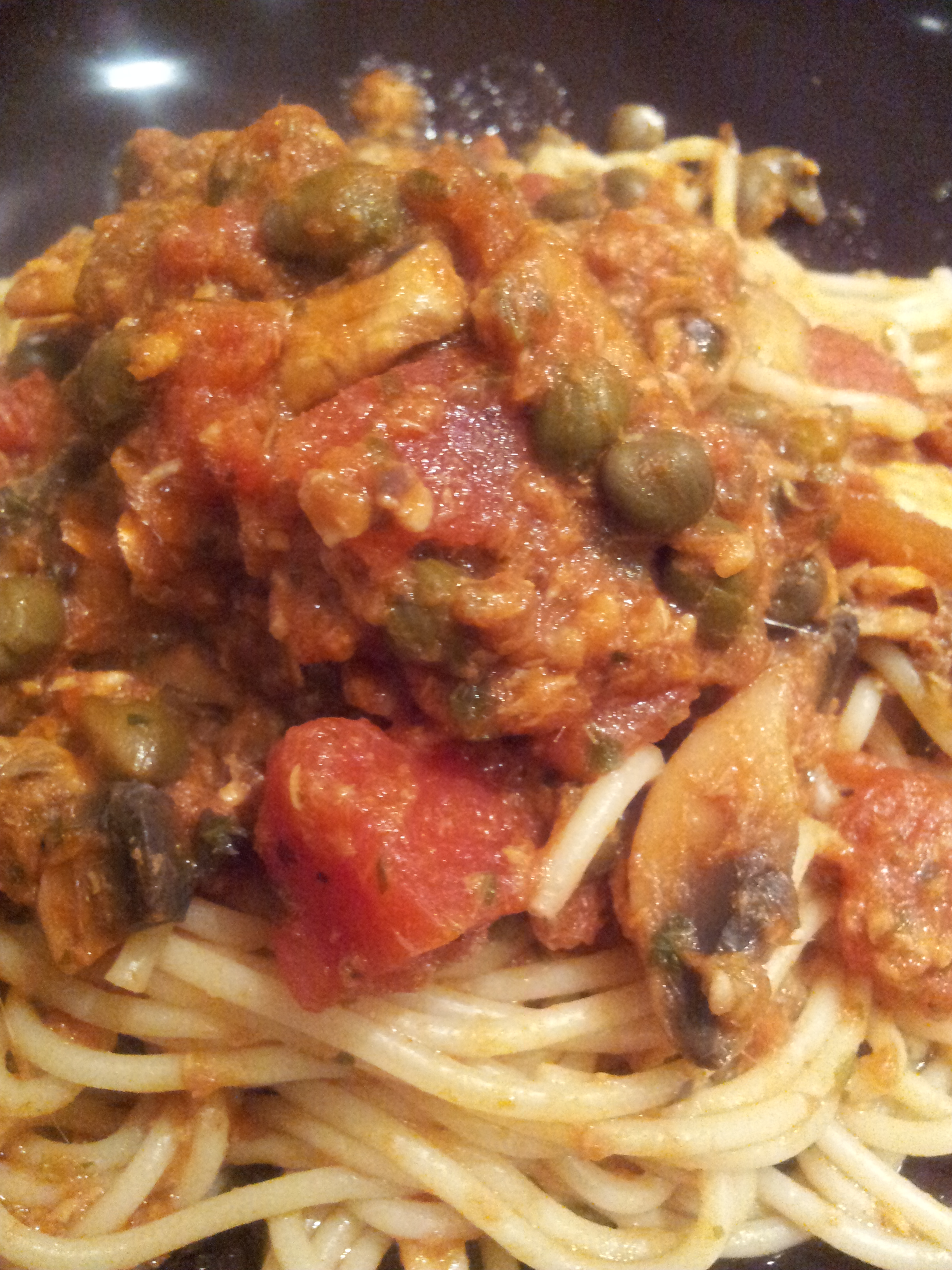
Variety in the diet is something I emphasise to my clients and live by myself; as eating lots of different foods means that we get the different nutrients they all contain. Pictured are a couple of sardines we made into a tasty tomato pasta dish. Sardines are a great choice because they’re cheap, sustainable and a good source of healthy fats. I’m not overly keen on fishy fish, but the chili in this recipe worked superbly 🙂 (By the way, I left the gutting to my other half!)

As we’re on the subject of fish…I’ve also tried sushi again this month. Coming from a small town in West Wales, sushi restaurants weren’t exactly easily accessed when I was younger, and when I went to university I just never tried it (could well be down to having a housemate who was allergic to fish!) Anyway, I tried sushi for the first time about a year ago and didn’t like it. Having tried it again last week, I’m afraid I’ve still got a way to go before I can actually enjoy a traditional Japanese meal! It’s something I’d like to enjoy though, so it’s not my final attempt.

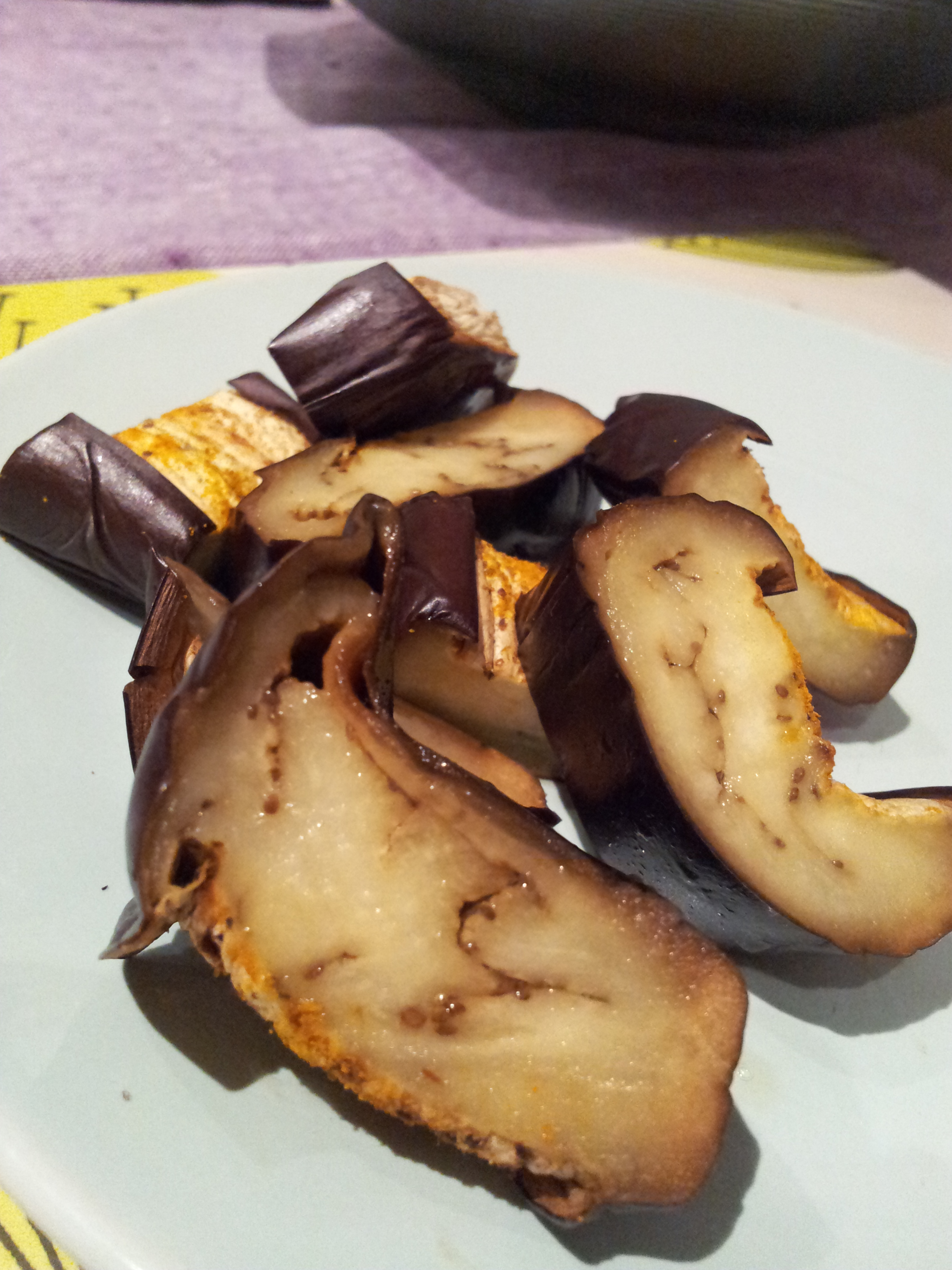
20141115_195605I don’t know about you, but as the weather gets colder, cold fruit and vegetables all the time just don’t do it for me. I’m quite a lover of raw vegetables or salad for lunch through the summer…but winter hits and I want something warm. A lot of the time I’ll make a soup, but (here comes that variety thing again) I also want something different. I’ve been making ratatouille with different veggies and baking squash, aubergine and sweet potato too.
Aubergine is a particular favourite of mine because I really like the texture. Aubergine, AKA eggplant, is very low in calories and high in fibre. It also contains B-vitamins and anti-oxidants. Plus the gorgeous purple skin makes any plate look divine!

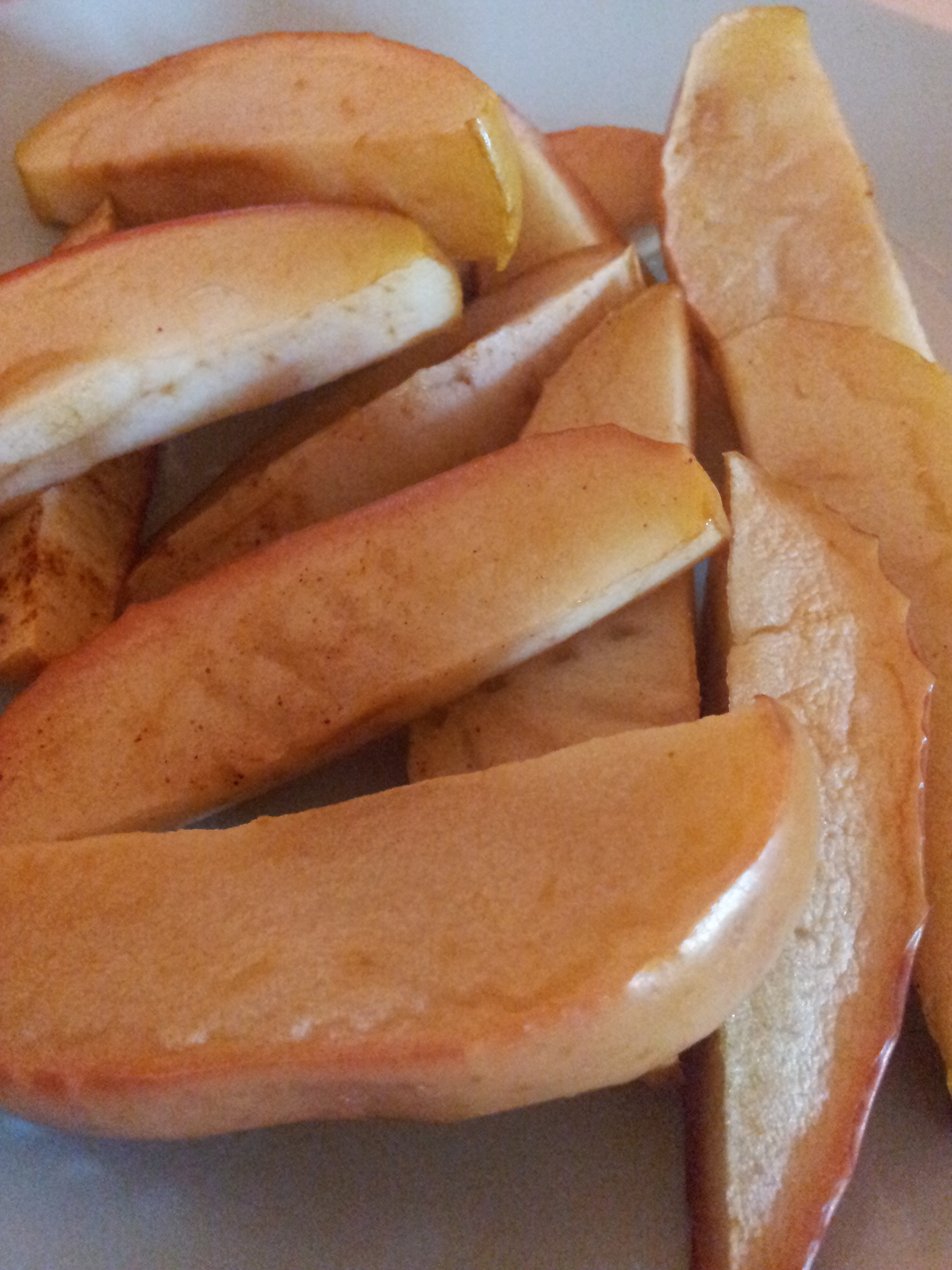
20141115_143711No…These aren’t chips..I’ve even started baking fruit! I find baked apple slices with a little cinnamon have that added appeal in these cold months!

20141107_191350

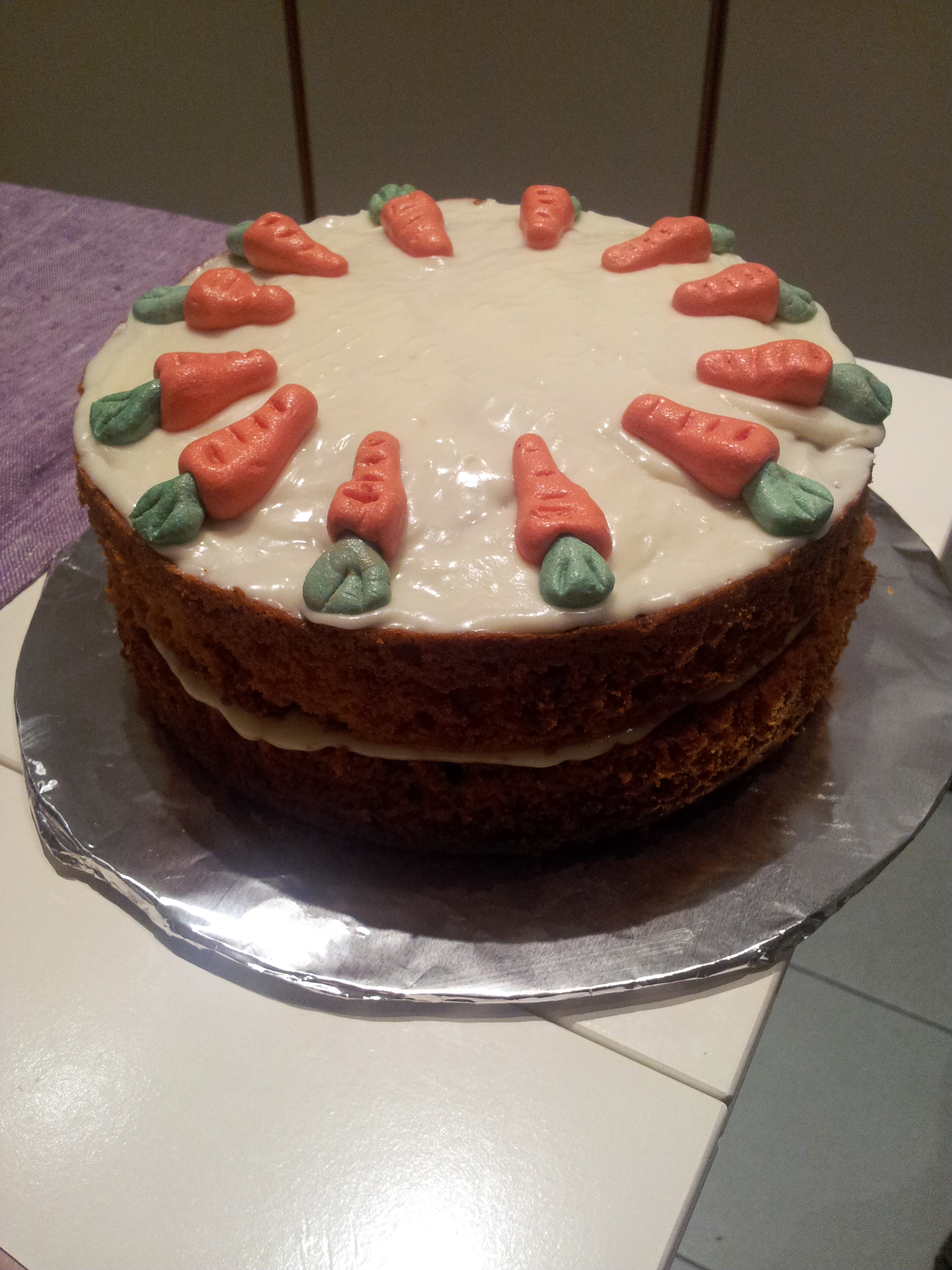
November has also been a busy month for birthdays! I enjoy baking, so I figured that I’d try and put a dietitian slant on my cakes and bakes. That’s included a carrot cake (YUM!), some chickpea brownies and a chocolate sponge made with quinoa instead of flour. I enjoy experimenting with recipes and enjoy the reaction from my friends when I tell them what they’re made from even more!

See you next month!

Healthy Living

A Dietitian’s Kitchen – October

Well, I’m cheating this month. September was a bit hectic and I didn’t get a chance to fill you in on what’s been going on in my kitchen, so I’m combing the two!

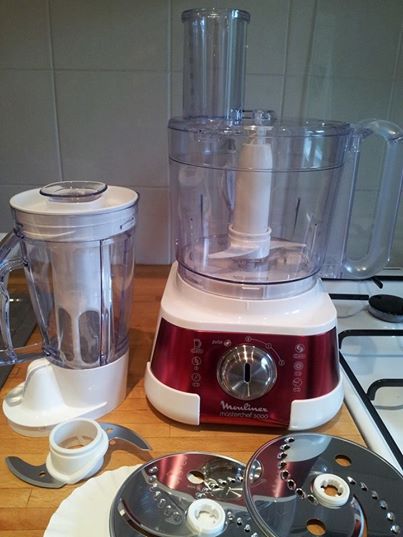
September saw the arrival of my new favourite toy…

food pro

I love it, and I actually think I’ve used it pretty much every day. I’m not sure how I lived without one for so long.

I’m now able to make my own hummus, smoothies and juices so easily. There’s no more tears slicing onions and all my veg is universally chopped!

Watch out for future recipes using this baby!

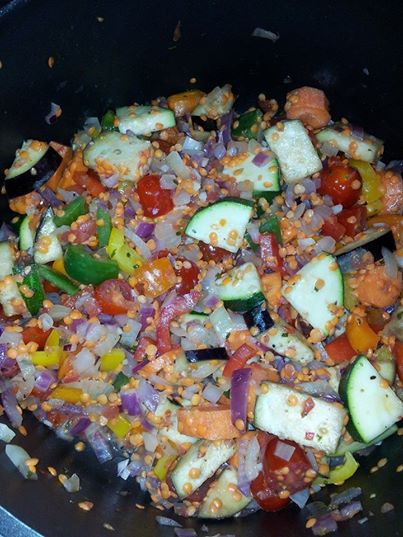
soup1

Autumn seems to have hit Brussels with a vengeance. The weather seems to have gone from being gorgeous to hat and scarf weather overnight! So, my soups have made a return. I’m a BIG fan of soups for loads of reasons;

1. They taste great and are packed with vegetable goodness
2. It’s a handy way of using up any leftover veg (or leftovers for that matter)
3. They’re relatively cheap and easy to make
4. Convenient to keep in the fridge or frozen
5. It’s all cooked in one pot so you don’t lose any of the water soluble vitamins

I could go on, but you get my point. SOUPS ARE AWESOME. I’ll be posting some recipes soon.

Curries have also been on the menu a lot recently. I’ll be honest, 9 times out of 10 I’m pretty lazy and use a curry paste, but we’ve got brave of late and had some fantastic taste (and smell) explosions going on. Our spice collection is now building and I’m just working on a final recipe for a vegetable curry that tasted amazing.

As my Eatwell group starts in a couple of weeks, most of my time in the kitchen has been dedicated to designing the course and recipes for that. 

So, it’s a bit of a ‘watch this space’ month, but hopefully, these recipes will be worth the wait!

Healthy Living

Healthy Eating – on a budget

Yes…fresh fruit and vegetables can be expensive, especially if you’re worried that half of it will go to waste. BUT there’s so many ways you can use up fruit and vegetables, team that with a few tricks when shopping and I promise you, you can serve up a lovely nutritious meal!

It takes a little bit of thought and planning so I’ve put together my top 12 tips to help you save money.

1. Use frozen or tinned fruit and vegetables.

Both tend to be cheaper than buying fresh, and they keep much longer. They’re still just as good for you nutritionally, just opt for fruit in natural juice as opposed to syrup and select tinned vegetables in water without too much added salt.

2. Buy in bulk.

Dried goods like pasta, rice and noodles keep for ages and the large packs are often significantly cheaper than the smaller ones. For example, I did a quick price comparison…for a 500g bag of pasta you pay £1.90 (2.40€) per kilo, for a 3kg bag it works out at £1 (1.26€) per kilo. That’s almost half price!

…that leads nicely onto my next tip

3. Check the price per kilo.

Most shop item labels now will state the price per kilo in addition to the item price. This is a handy, easy way to check if you’re getting best value for money. Once you become used to checking this, it becomes second nature and addictive. You’ll be in store for some surprises!

4. Go for store brands.

When you buy branded goods, you’re paying a premium for the brand and fancy packaging. There are lots of foods that taste very similar whether it’s branded or stores own. Having said that, there are a couple of foods where I’ll always buy the branded version as the store versions just aren’t as good. However, that’s personal preference and it’s something you can trial with your everyday items! You could end up saving yourself a small fortune!

5. Make use of offers.

Whether it’s buy one get one free, 20% extra free, or reduced because it’s going out of date, take advantage! Most stores will reduce items in the evenings, so time it well to get the best deals. Things like fish, meat and even fruits and veggies freeze well, split them into portions though, otherwise they may be stuck in a clump when you come to use them. Chopping up the vegetables will also save you time later on, plus frozen fruit tastes great in smoothies. Just make sure you have plenty of room in the freezer!

6. Bulk out with pulses.

If you don’t often cook with lentils and other pulses, I strongly recommend that you try them. The term ‘pulse’, used interchangeably with ‘legume’, encompasses all types of beans, peas and lentils.  They’re a great source of protein, fibre, iron and other vitamins and minerals. You can buy them canned or dried and they make a great addition to soups, curries or casseroles. Just ensure you cook them as per the instructions.

7. Use up fruit and veg that’s passed its best.

I HATE throwing out food, so we don’t, hardly anything goes to waste here…Over-ripe bananas? Healthy banana bread. Bruised and browning apples? Stew them. Veg on its way out? Chuck it in a soup. If you’ve bought excess fruit and veg, freeze it (see point 5). Honestly, almost anything goes! Don’t just watch your fresh stuff go mouldy…use it! (I’m a big fan of soups, so watch out for my recipes as the autumnal weather strikes!)

8. Get a loyalty card.

Yes, I know this sounds obvious and one would think that most people do this now, but it’s so simple yet easily forgotten. Most stores offer vouchers linked with the amount you spend and send a monthly magazine containing details of offers.

eat-seasonably_502918ce5ea0c_w1500

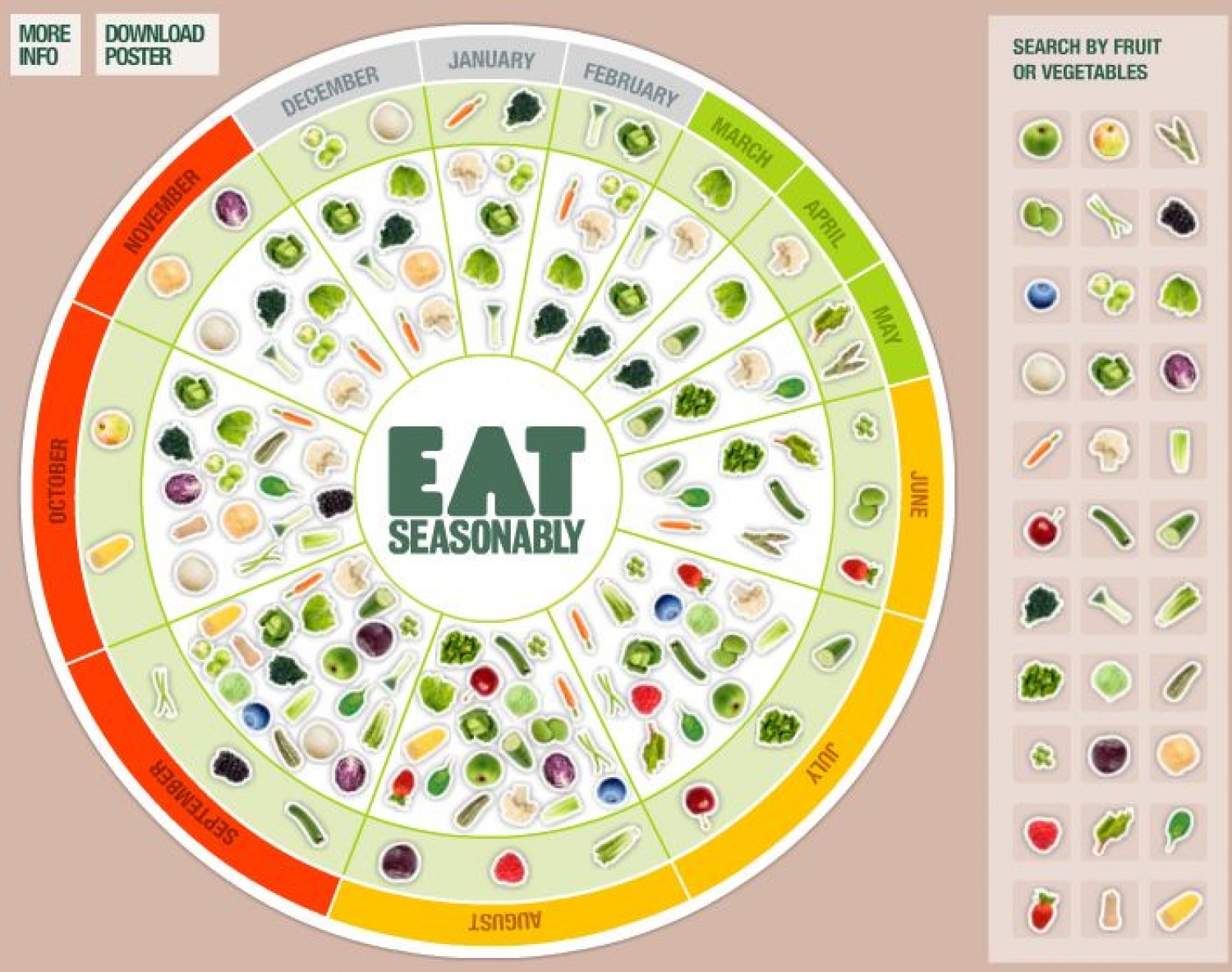
9. Eat in-season.

It’s cheaper to buy fruit and veg that is in season so store promotions will often reflect this. You’ll also notice that if Spain has a great summer for tomato production, the price of tomatoes comes down. It’s just something to watch out for. If you’re not sure what’s in season when, check out this great chart by eatseasonably.

10. Support local farmers.

I’m spoiled for choice here in Brussels with food markets on pretty much every corner. I don’t just love them because of the bargains though, it’s the whole atmosphere. Prices are often set per kg and generally are cheaper than supermarkets, plus, if you’re buying lots and visit them regularly, they’ll often throw in a free broccoli or squash – you’d never get that in a supermarket!

11. Grow your own!

If you have a garden and the space, one step up from going to the markets would be to invest in your own little veg patch. Not only can it save you money but it’s also a lovely way to spend time with your children and reap the rewards of your hard work.

12. Planning.

I said at the start of this list that it can take a little bit of planning, so if you really want to make every penny (or cent) go as far as it can, then you’re going to need to have a meal plan. It’s a good idea to think about recipes that use similar ingredients or how leftovers from one meal can be used in the next. For example, the fresh ingredients for a spaghetti bolognaise aren’t all that different from a chilli, and that left over curry would taste great on a jacket potato.
It’s also worth thinking about how you can get the most of out the meat you buy. When we buy a whole chicken we cut off the breasts and legs, freeze them and then use the carcass for a tasty soup. That’s at least 3 meals from one bird (usually more as I bulk out with pulses and veggies!)

So there’s my top tips, let me know if you put them into action next time you’re shopping! Are there any more you use?